Start a Project
No Beer for Sale — The Water’s Been Cut Off
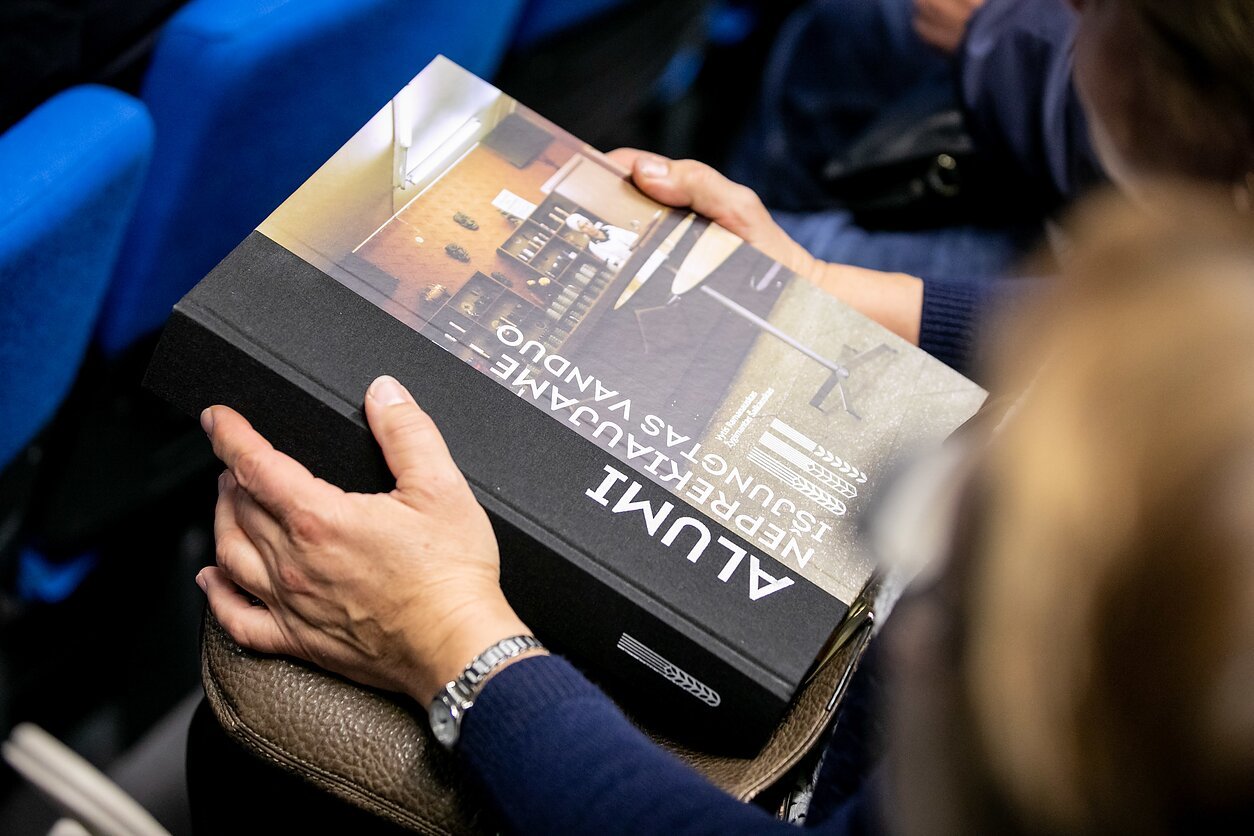
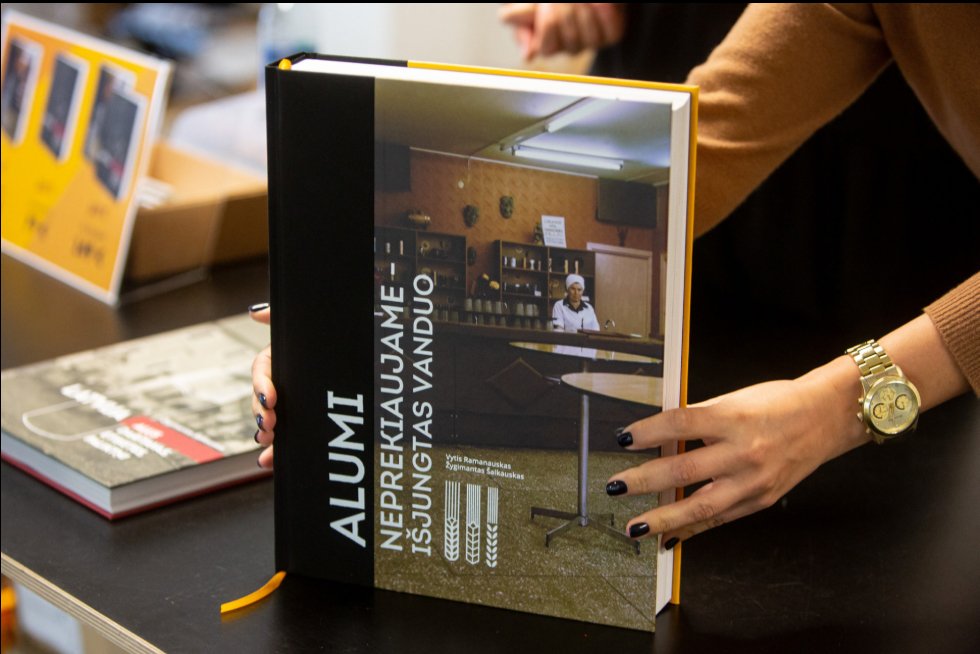
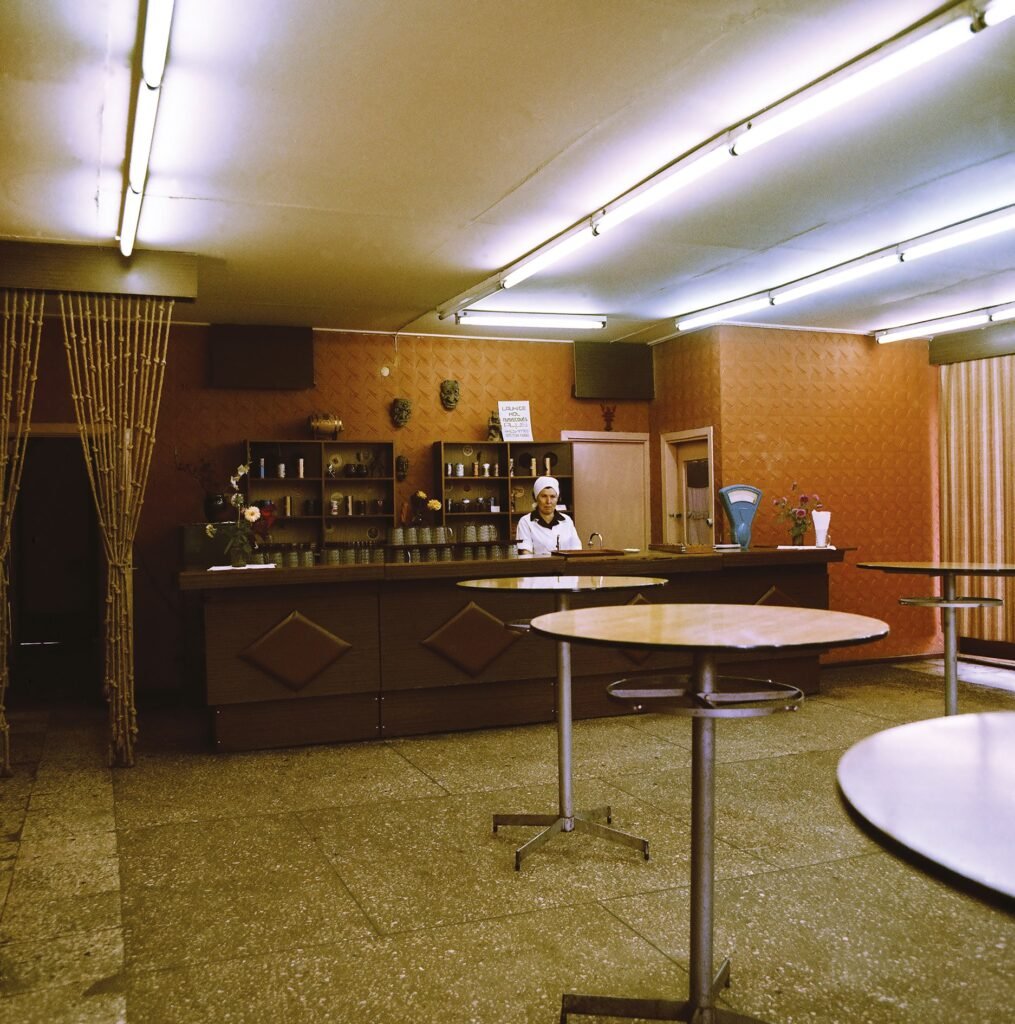
The hardcover book “No Beer for Sale — The Water’s Been Cut Off” stands upright, its cover featuring a vintage photograph of a bar interior and a woman behind the counter.
Historical book written by Vytis Ramanauskas and Žygimantas Šalkauskas. It explores Lithuania’s industrial beer culture, cafés, restaurants, and pubs from the nationalization of 1940 through to 1990.
Made: Book design, illustrations, and visual communication assets for the book presentation at the National Gallery of Art in Vilnius.

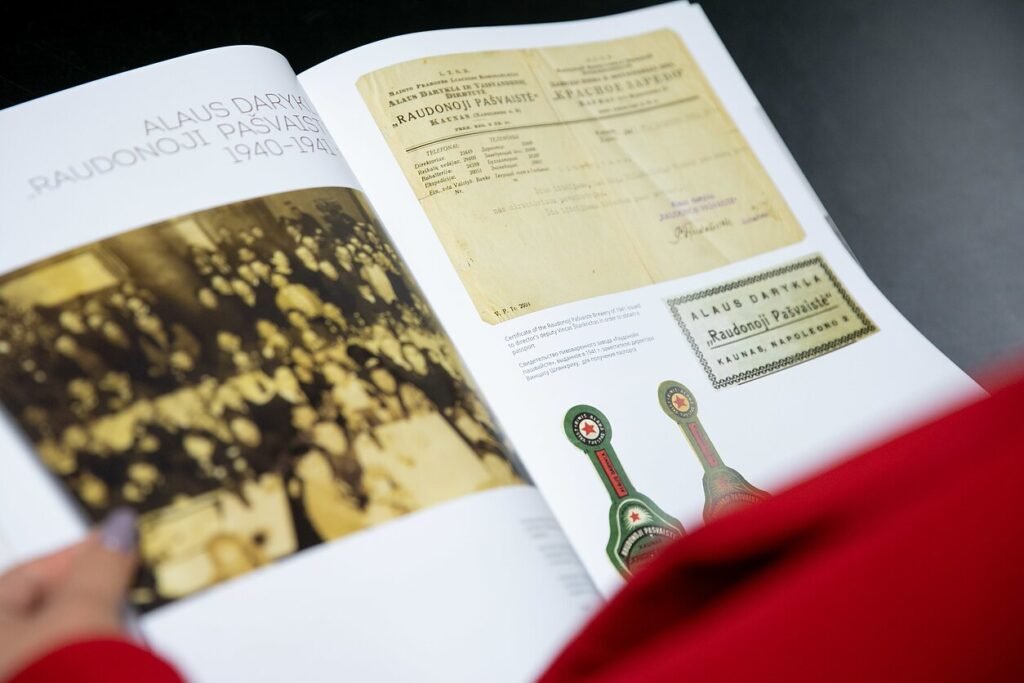
The book features an extensive collection of visual and archival material, with more than 2,500 illustrations, including historical documents, photographs, beer labels, coasters, branded beer glasses, bottle caps, and other artefacts.
It’s a seriously massive book—weighing around 4 kg, 620 pages.
Publisher: Mirabilis
Year: 2019
Format: 25 × 32.5 × 5 cm, hardcover
Languages: Lithuanian, English, Russian
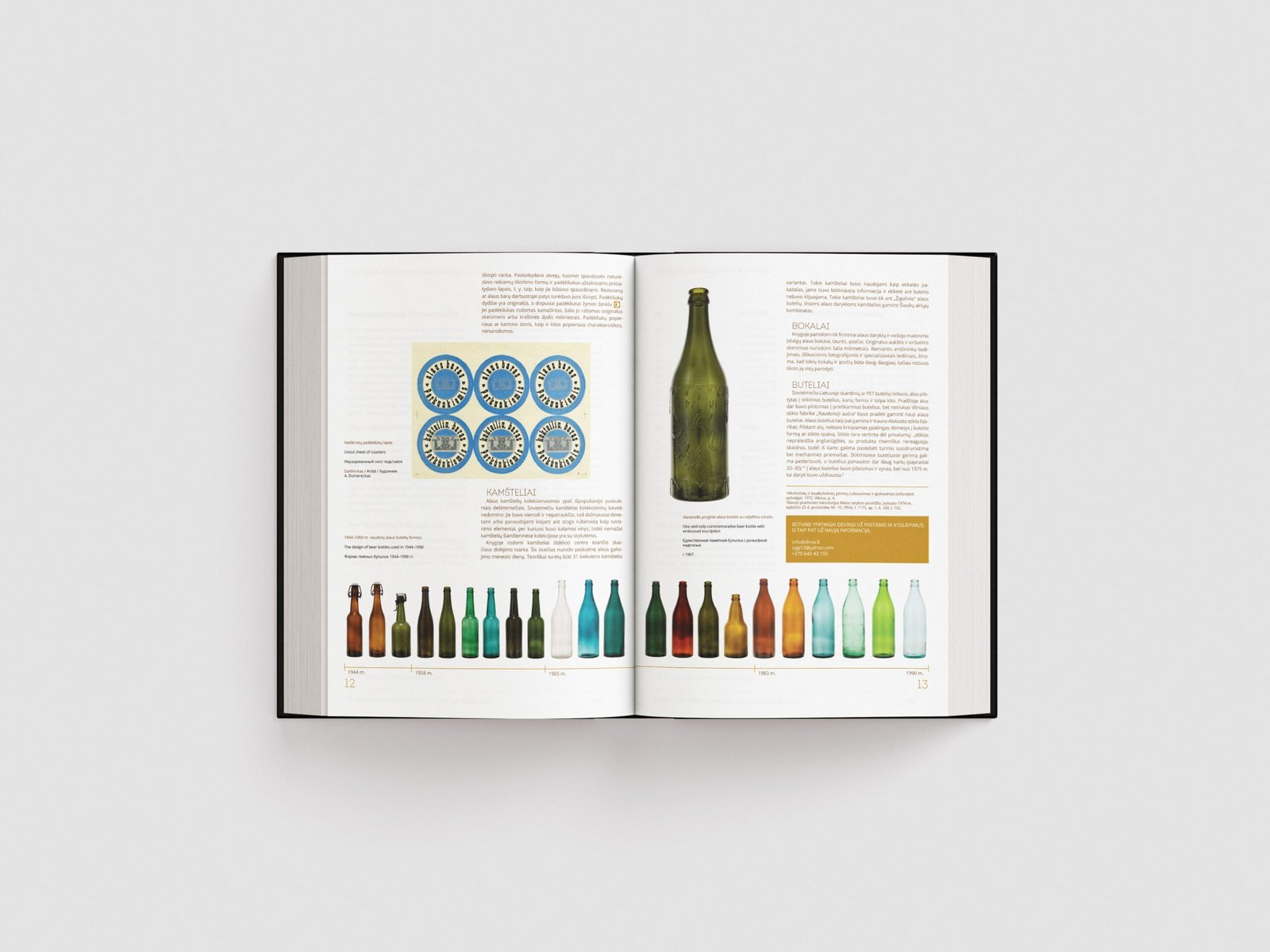
An open book spread presents the history of beer bottles, with vintage labels, a large green bottle, and a colorful timeline of bottle designs.
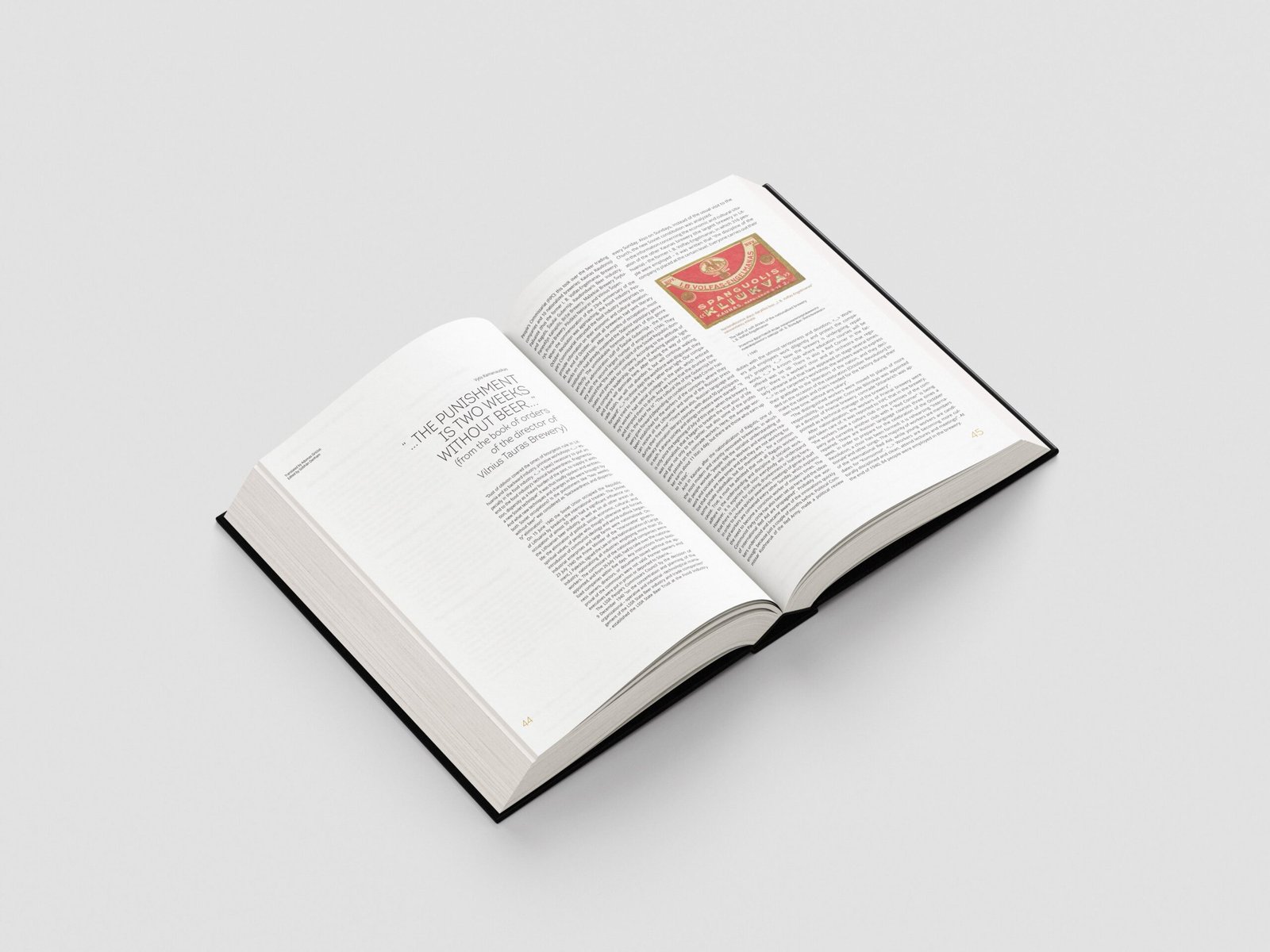
An open book shows the article “The Punishment Is Two Weeks Without Beer,” alongside dense text and a historic red-and-yellow beer label.
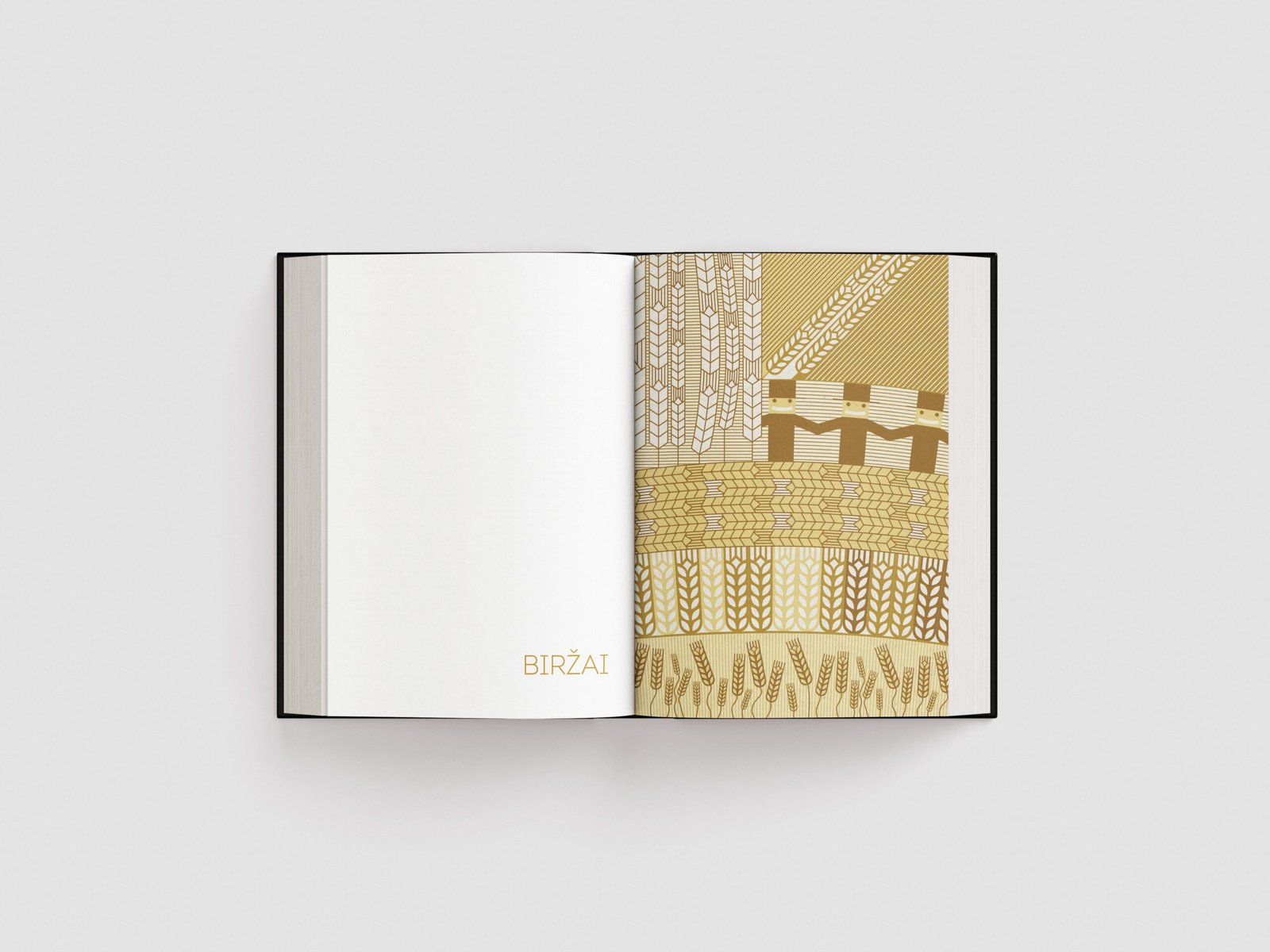
An open book displays a chapter divider for Biržai, with a playful gold illustration made from repeating grain, wheat, and geometric patterns.
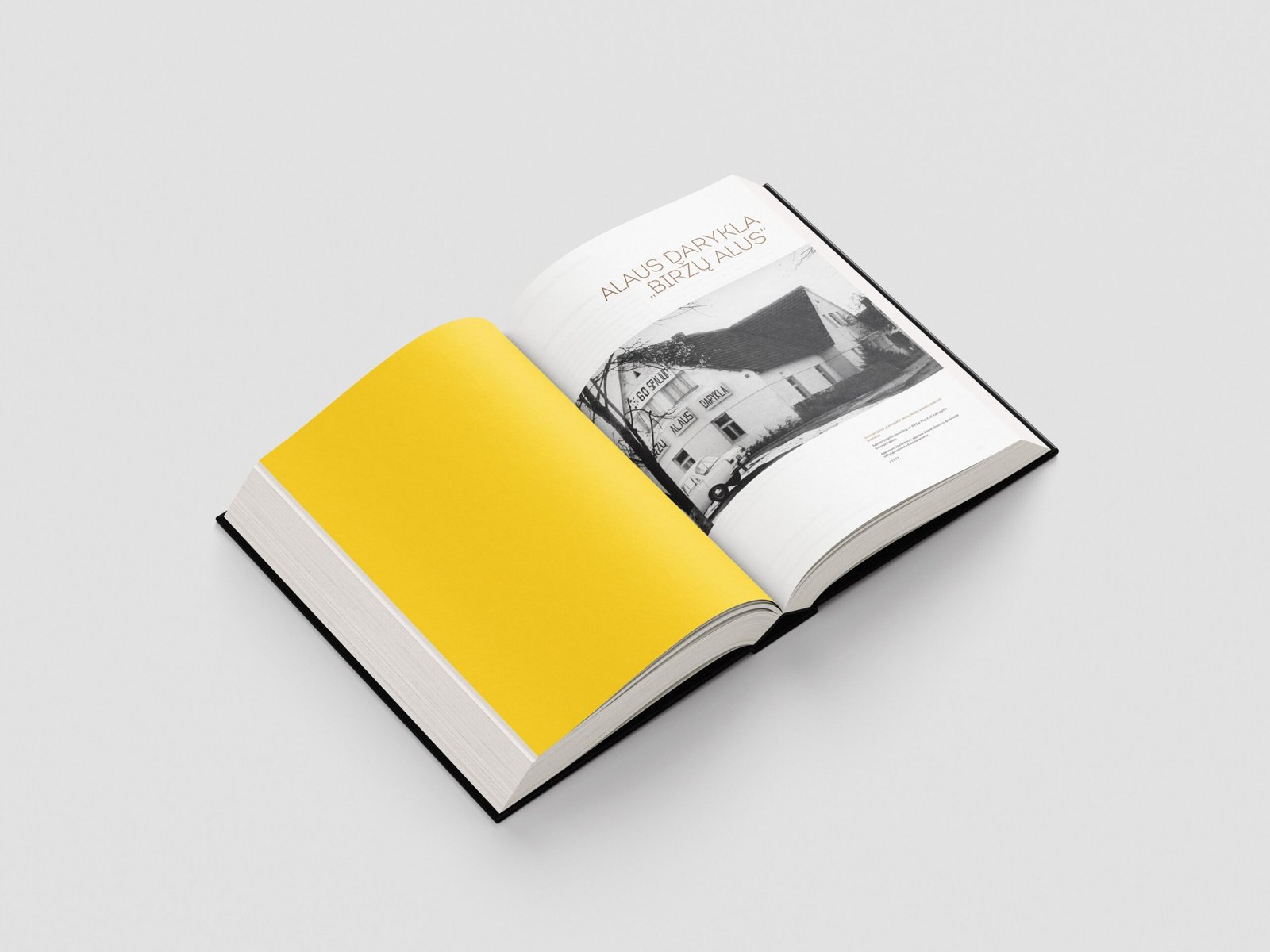
An open book introduces the Biržai beer factory, pairing a bright yellow page with a black-and-white photograph of the brewery building.
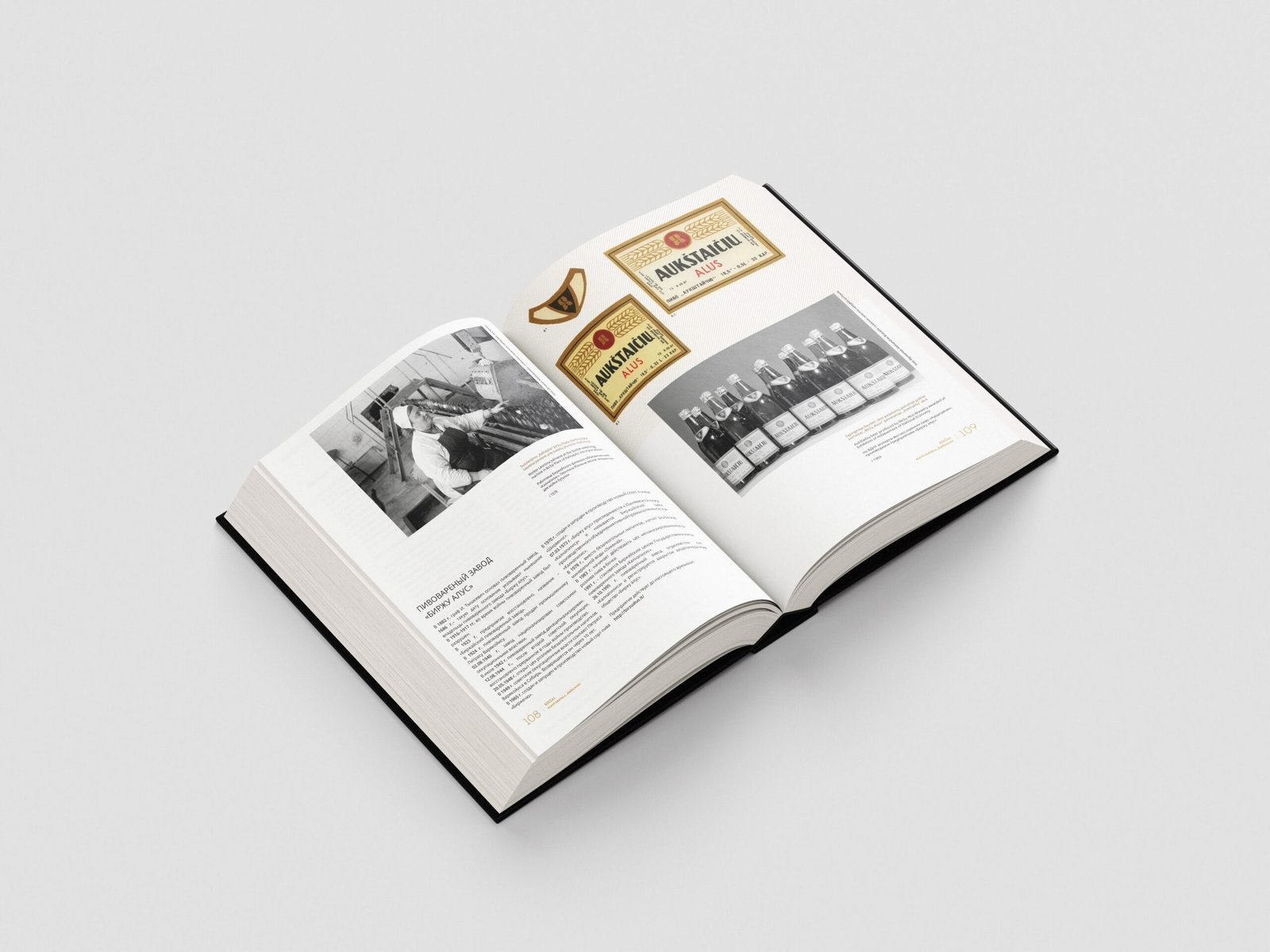
An open book spread presents historic brewery material, including a black-and-white photograph, vintage “Aukštaičių Beer” labels, and a row of bottled drinks.
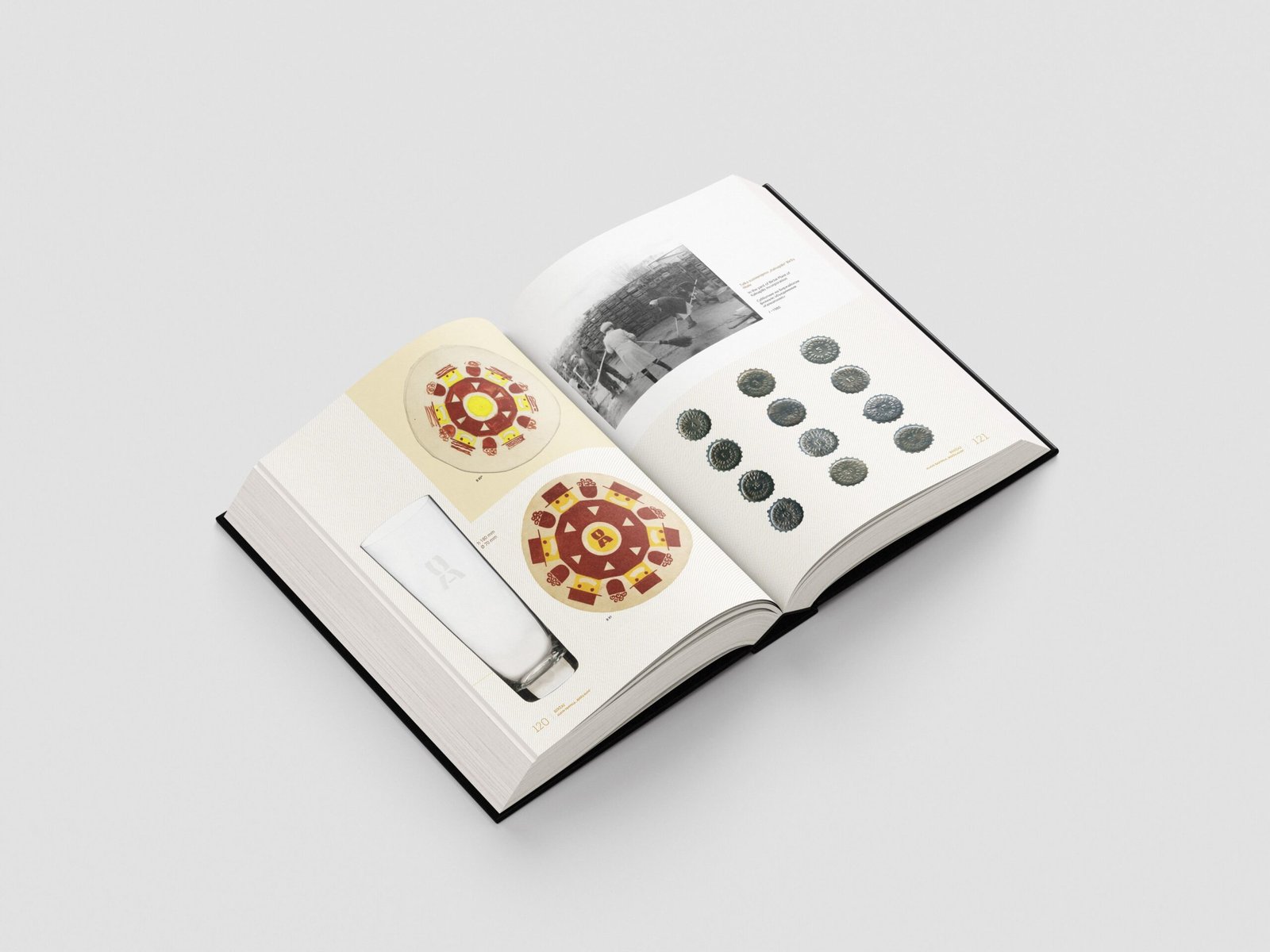
An open book spread displays decorative beer mats, a tall beer glass, historic bottle caps, and a black-and-white photograph from a brewery.
A seated person holds the large black book “No Beer for Sale — The Water’s Been Cut Off,” with a photograph of a historic bar interior on its cover.
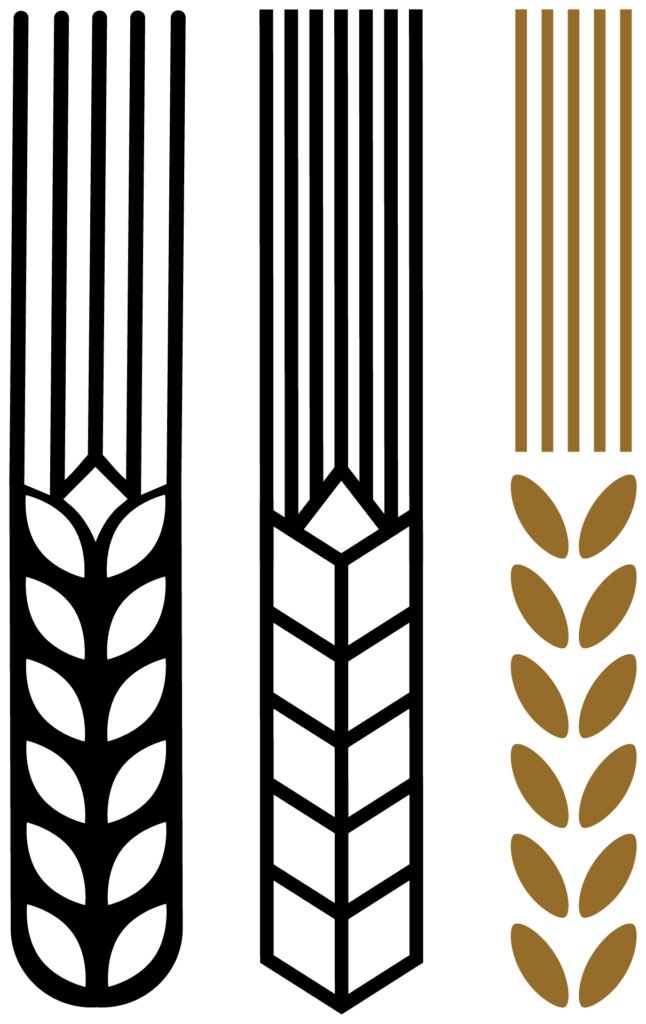
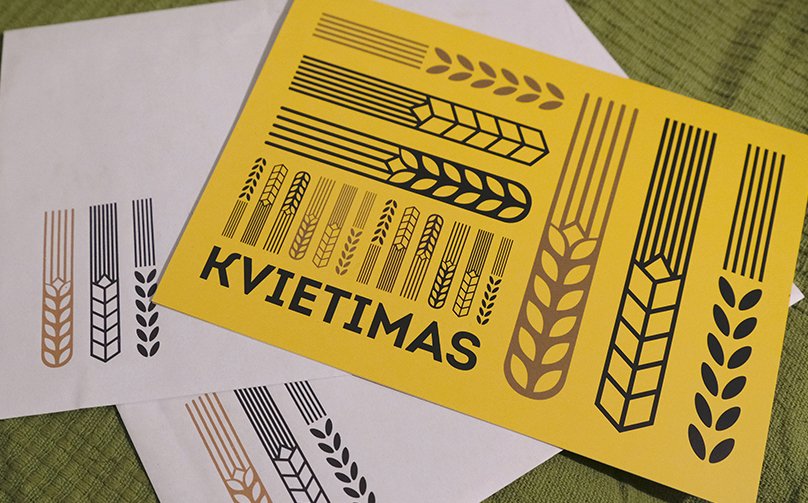
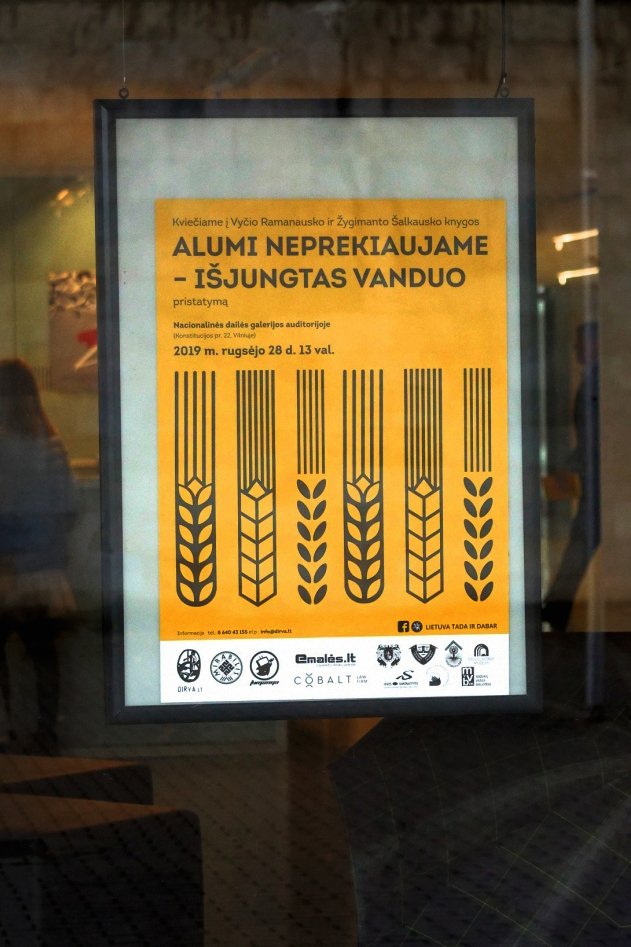
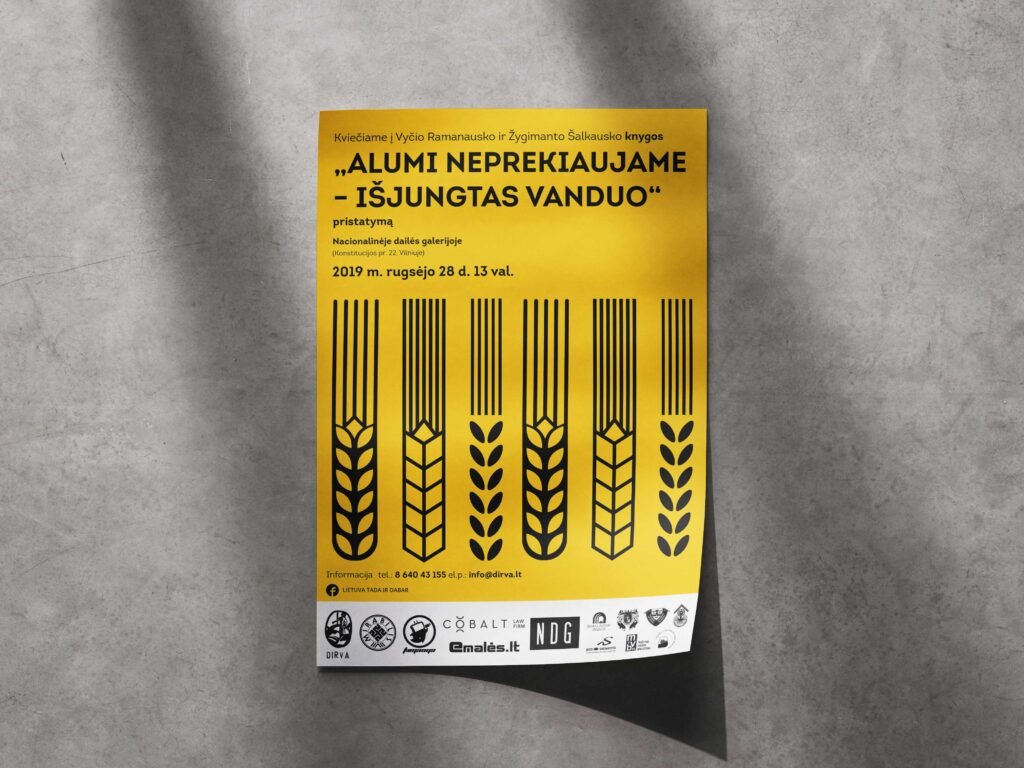
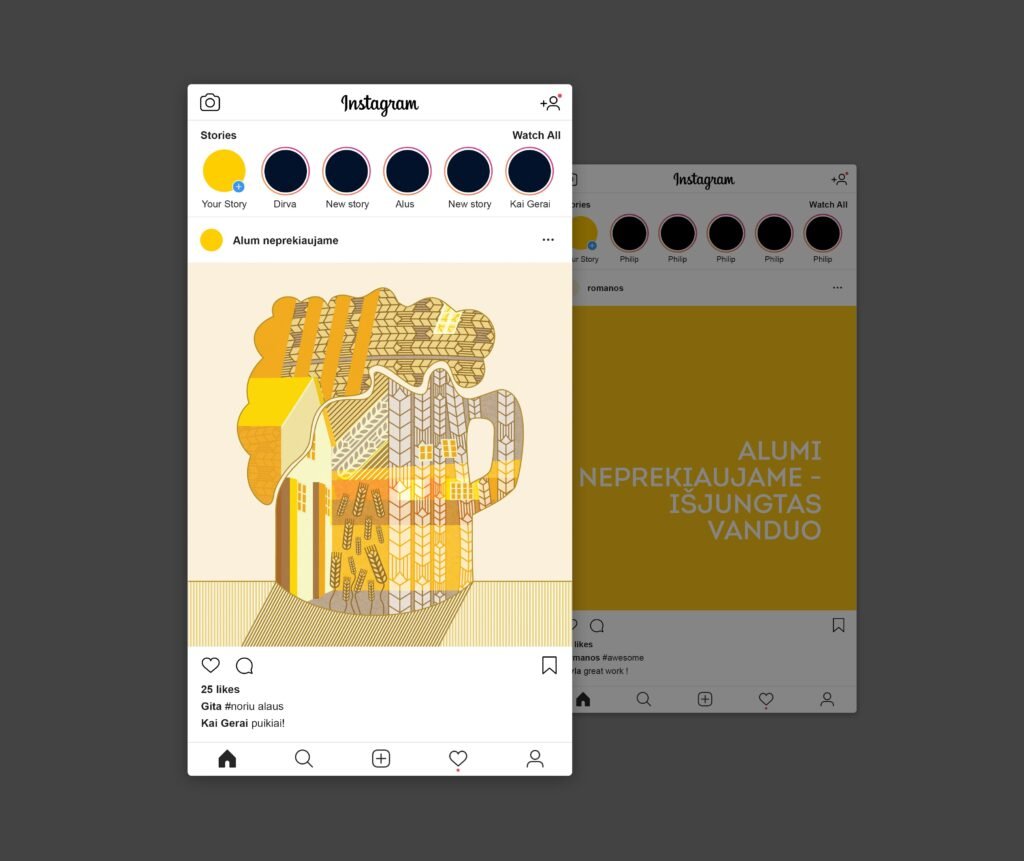
Kvass (instead of beer), canned food, and a Soviet-era-inspired shopping bag to carry it all were chosen as part of the book launch concept, setting the mood and taking visitors back to the period explored in the book. Typography and grain illustrations were used consistently across all communication materials, with every visual detail carefully selected to evoke the aesthetics and atmosphere of the era.
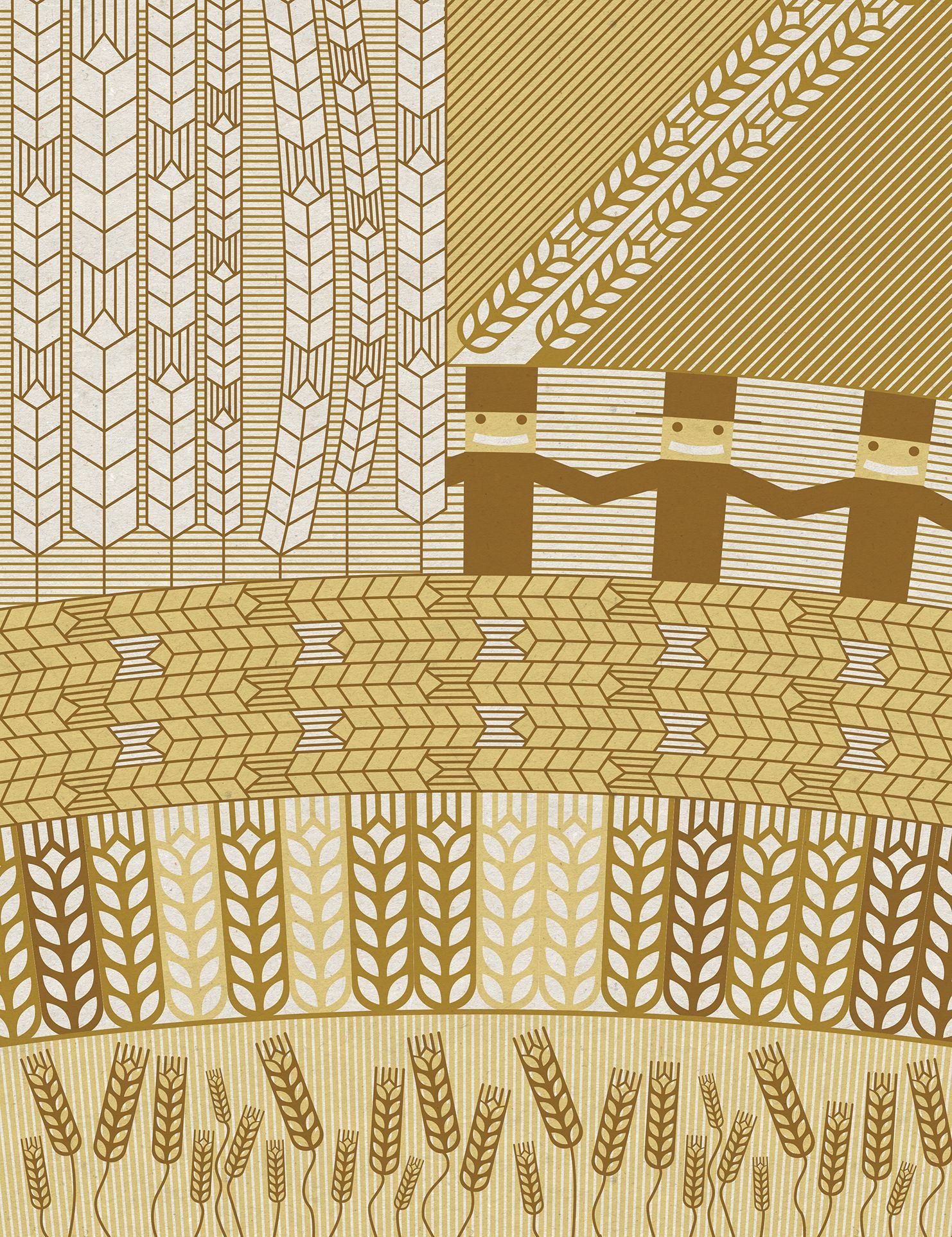
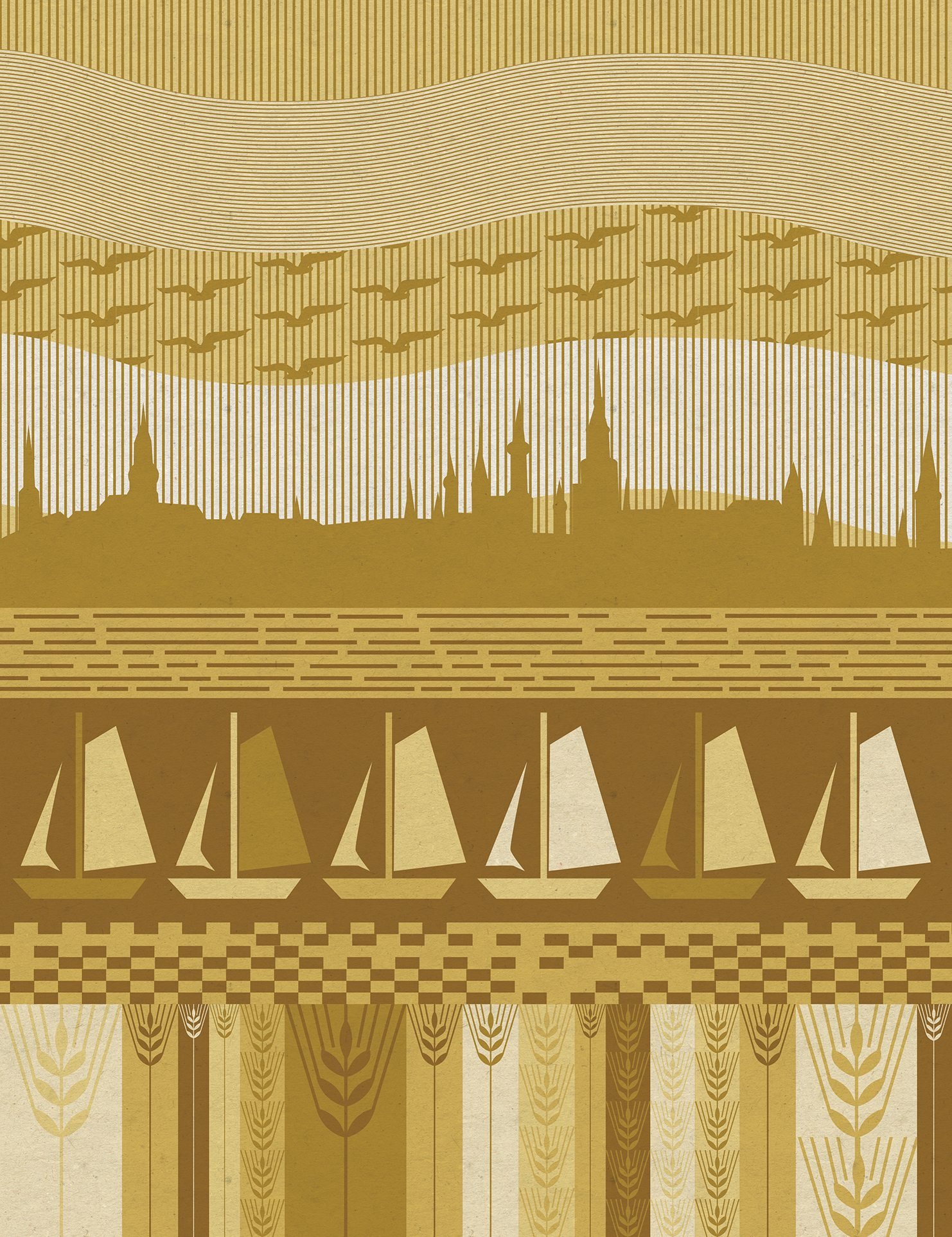
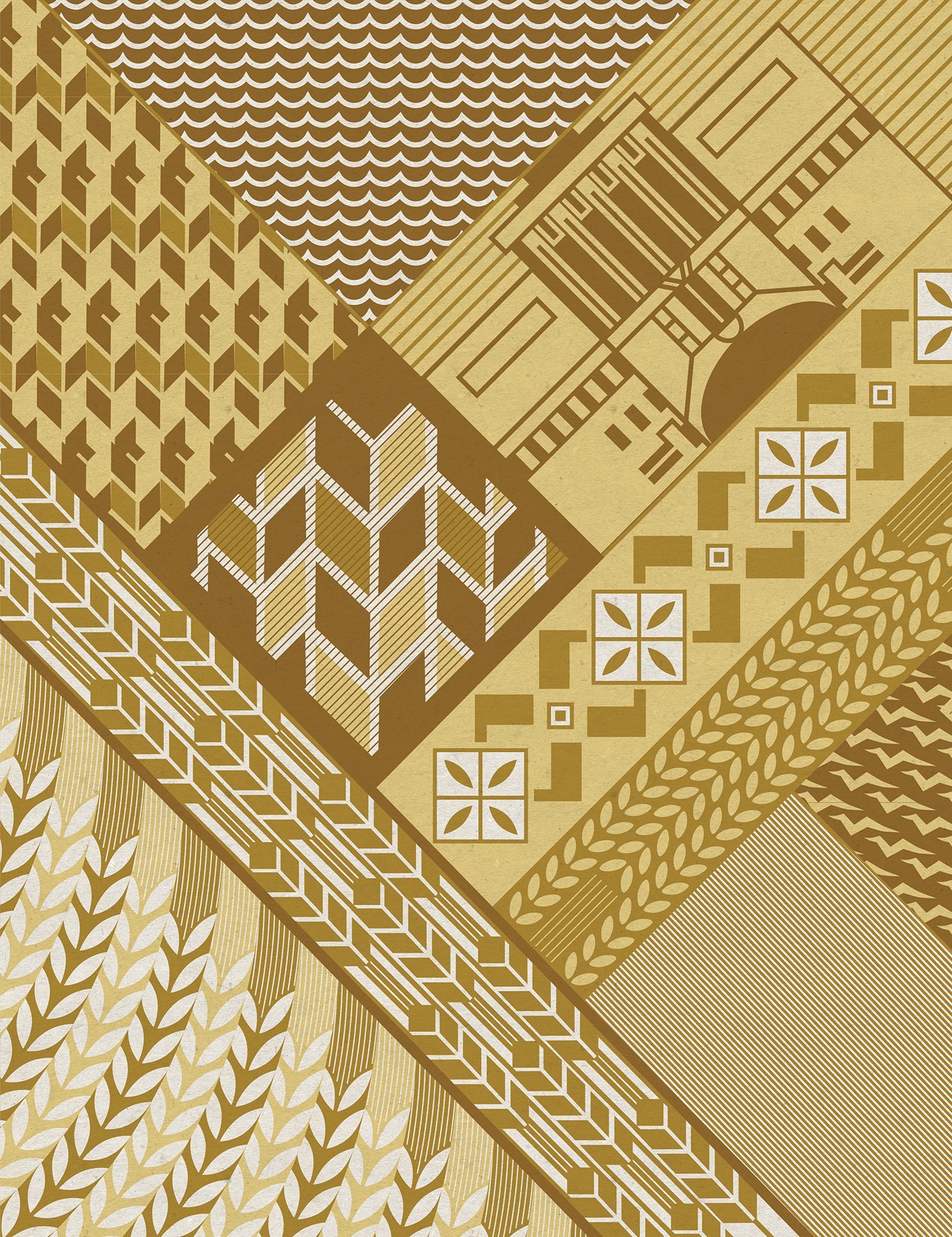
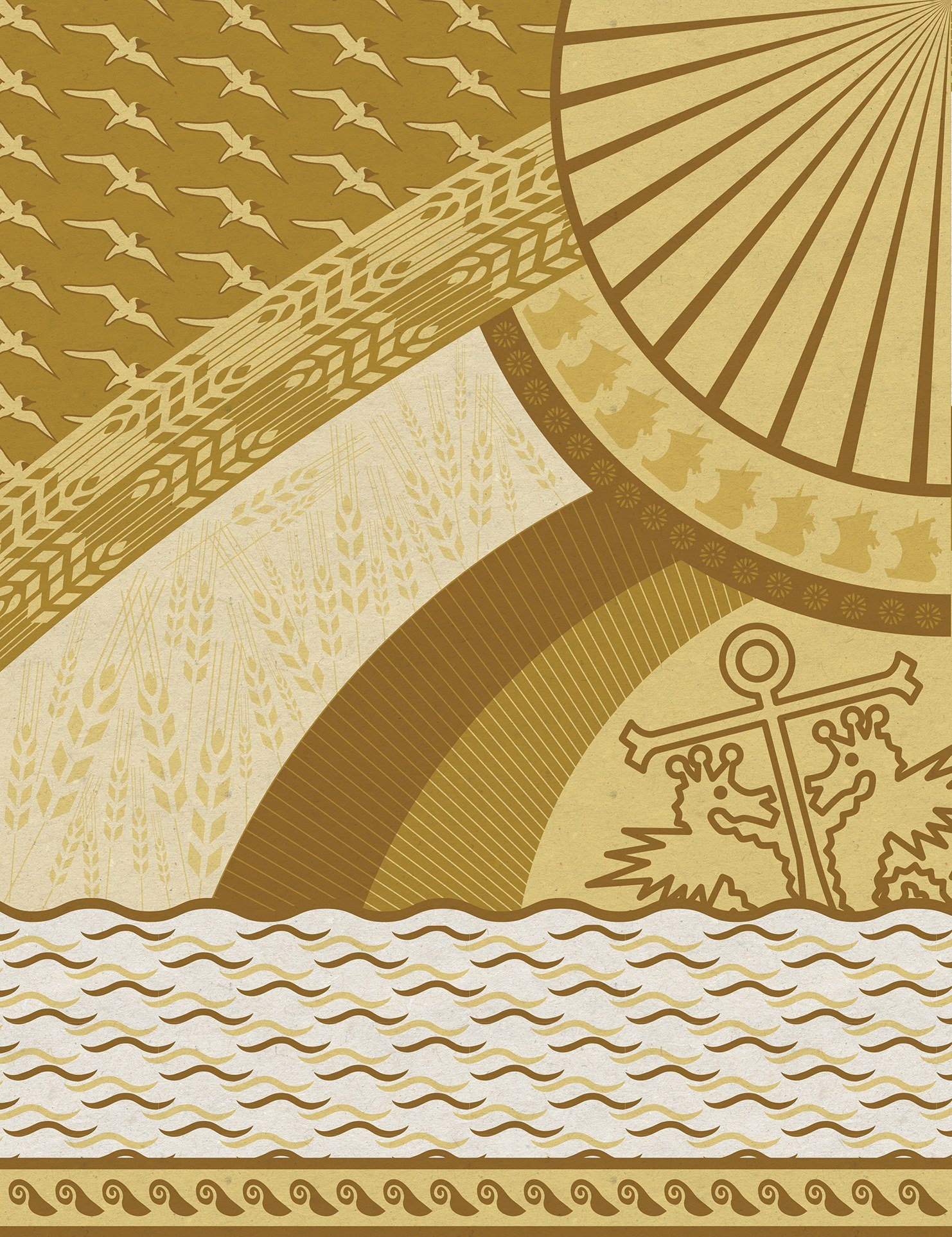
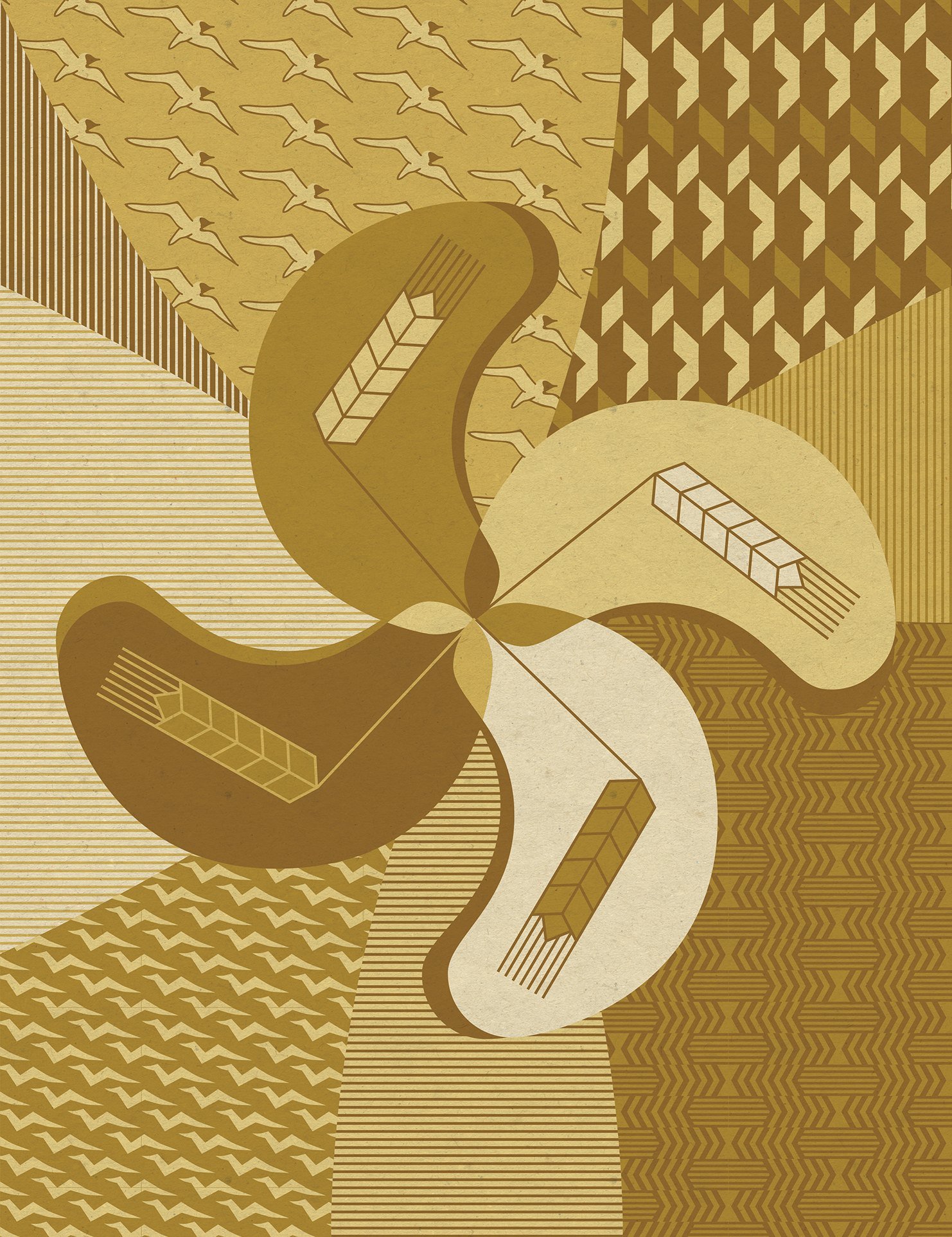
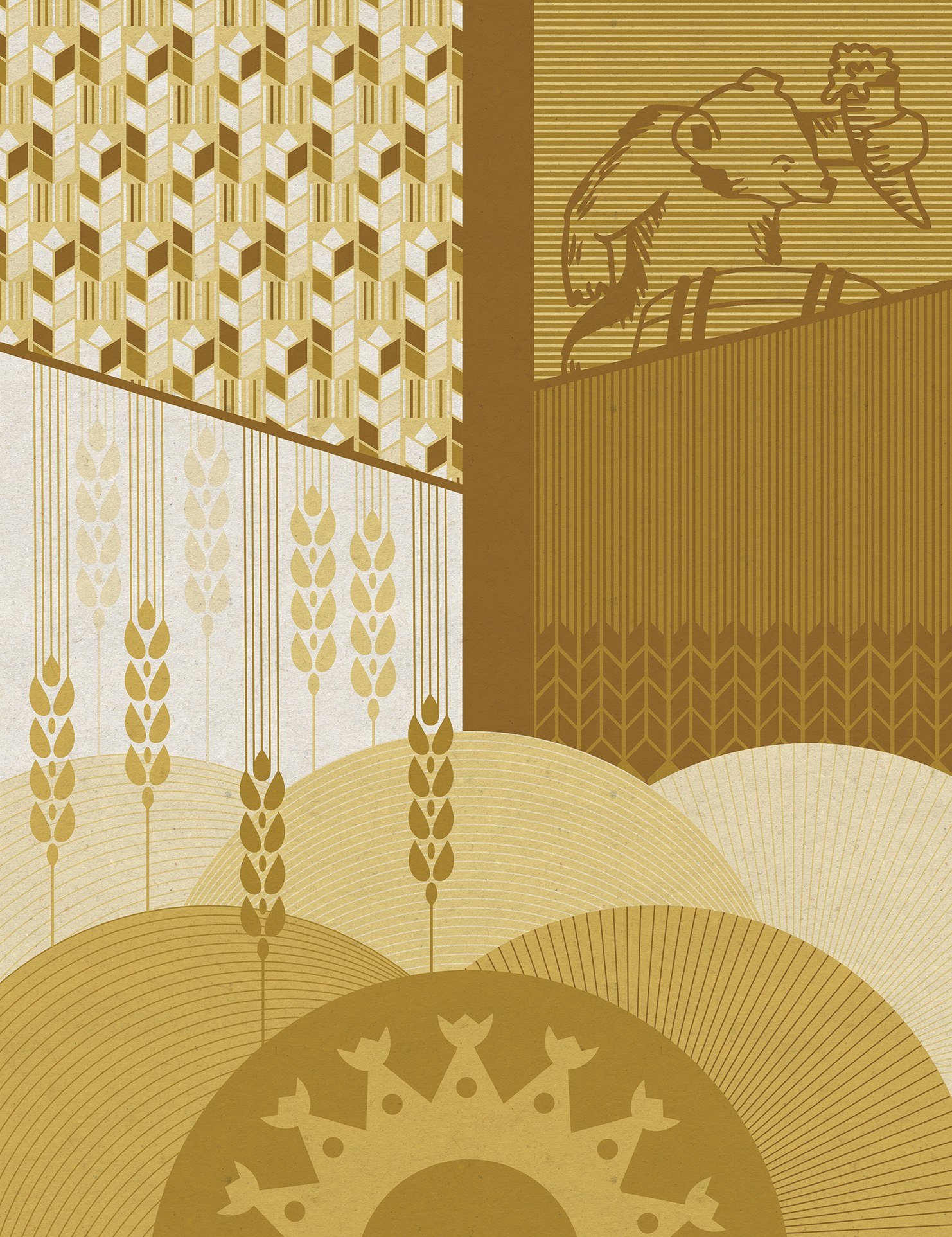
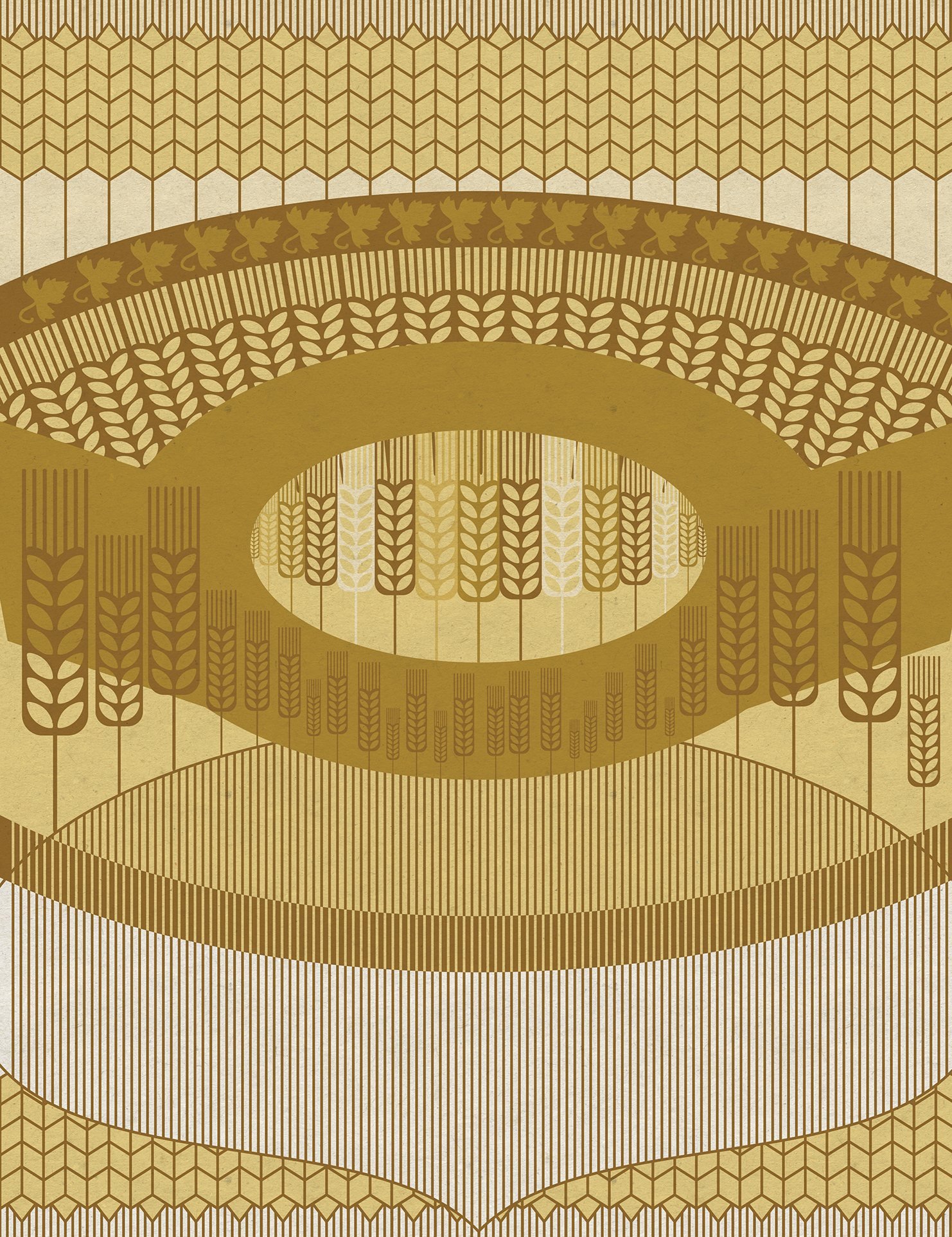
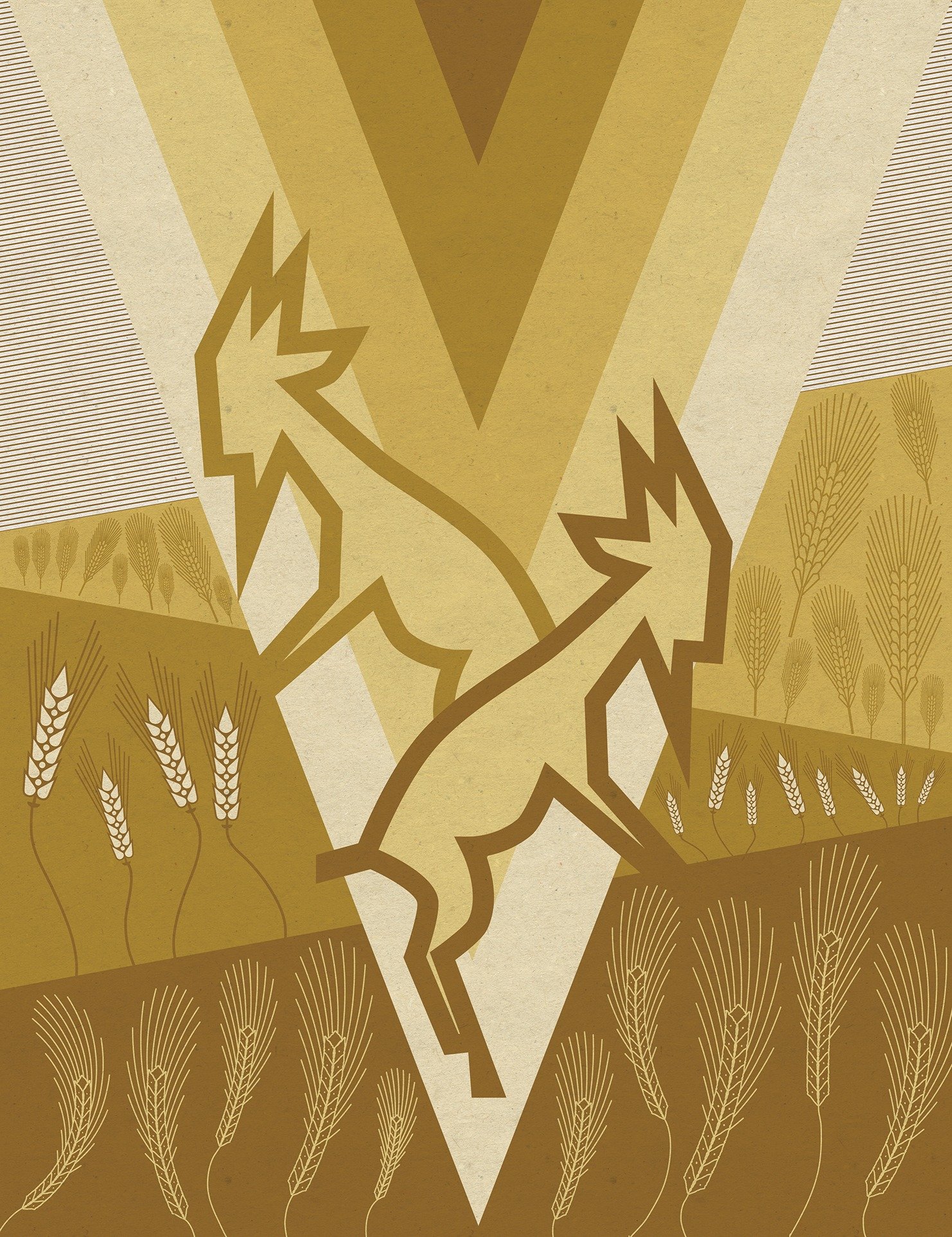
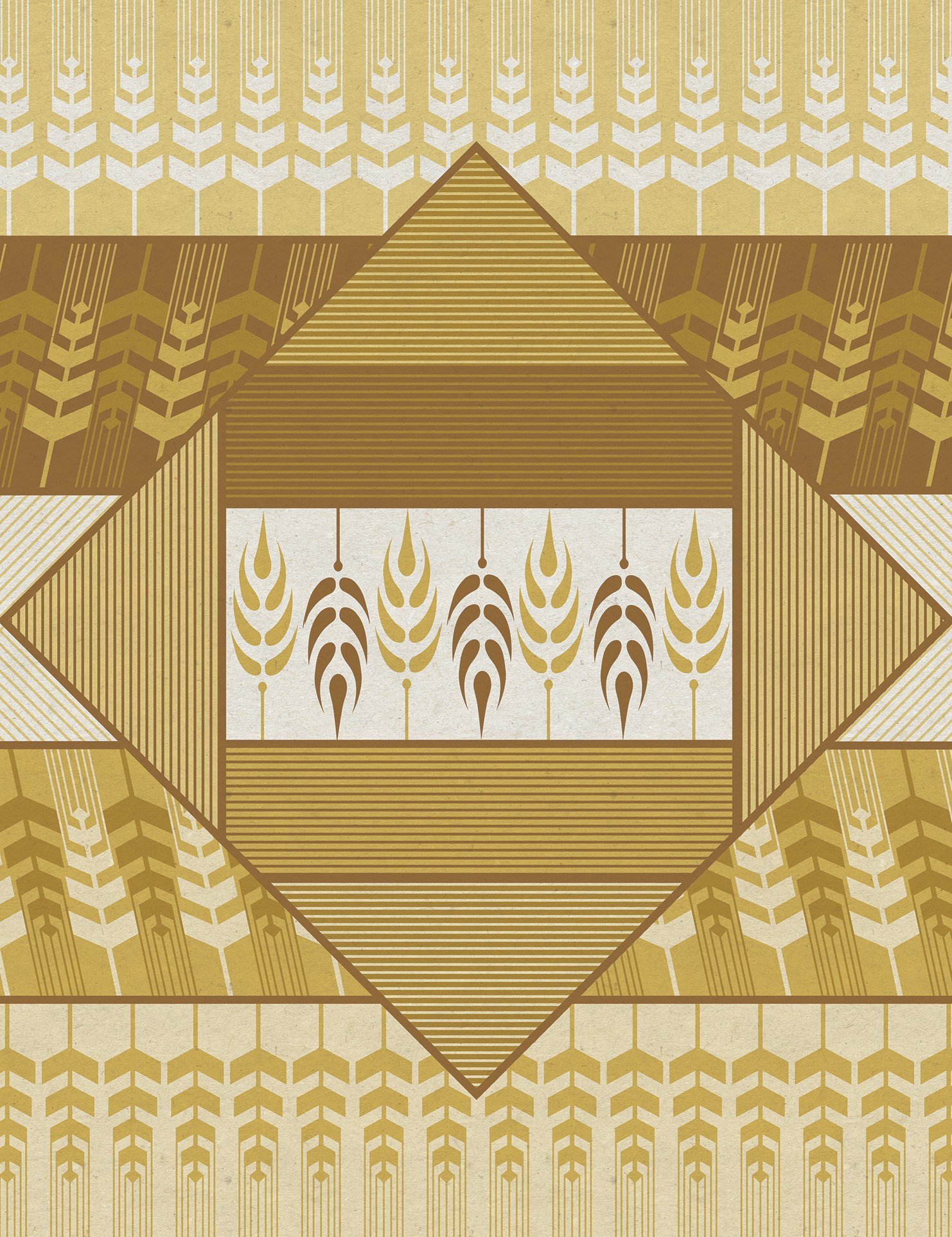
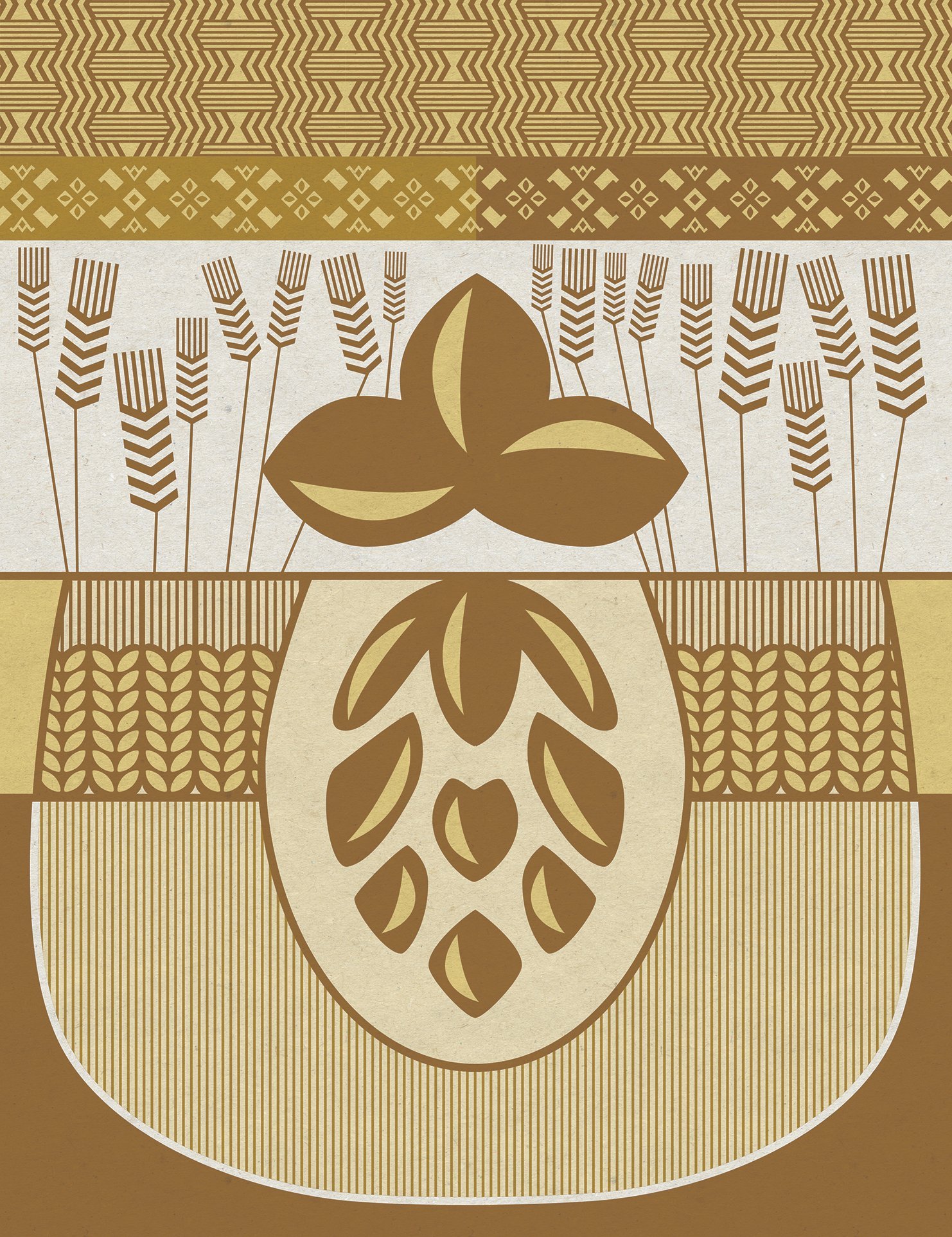
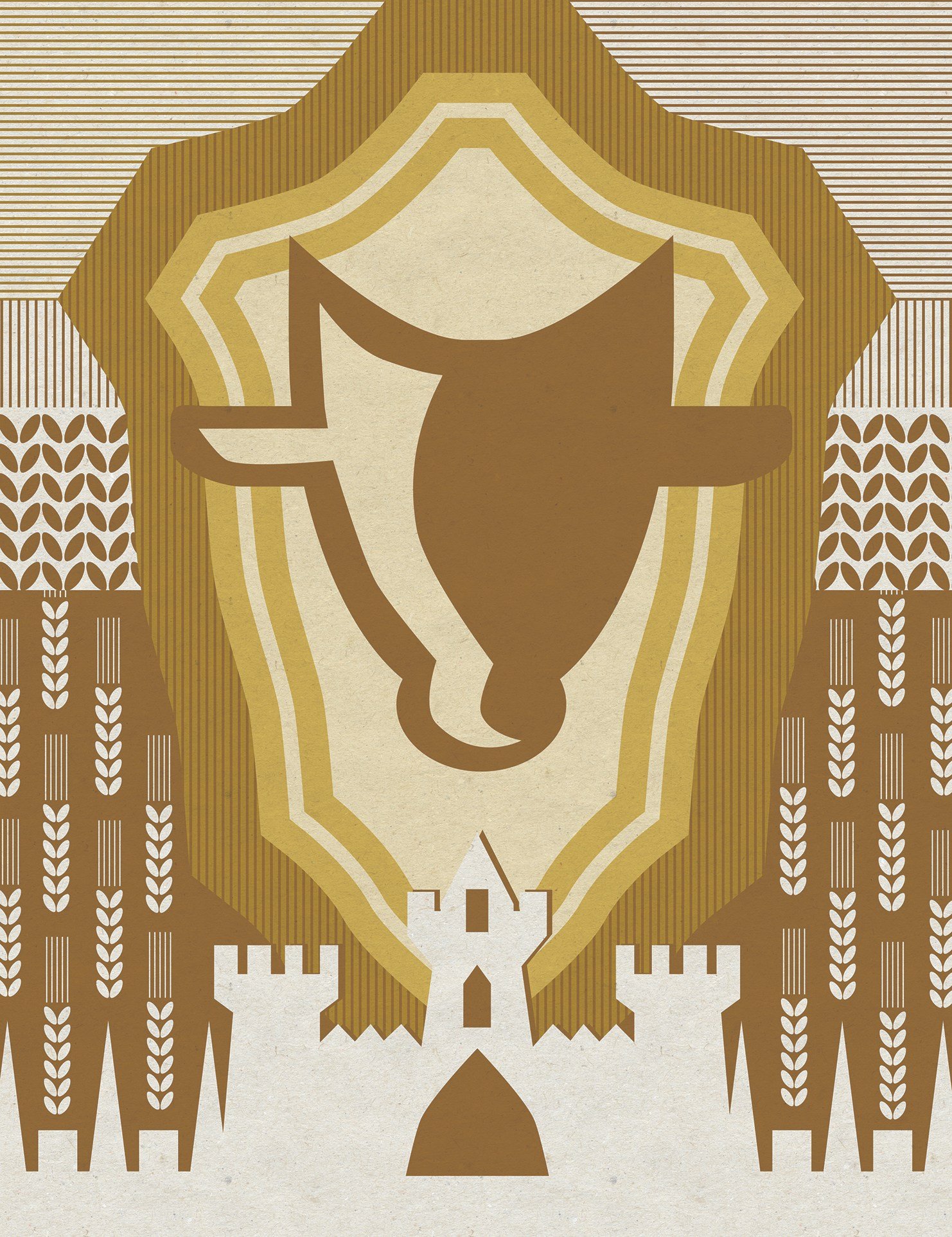
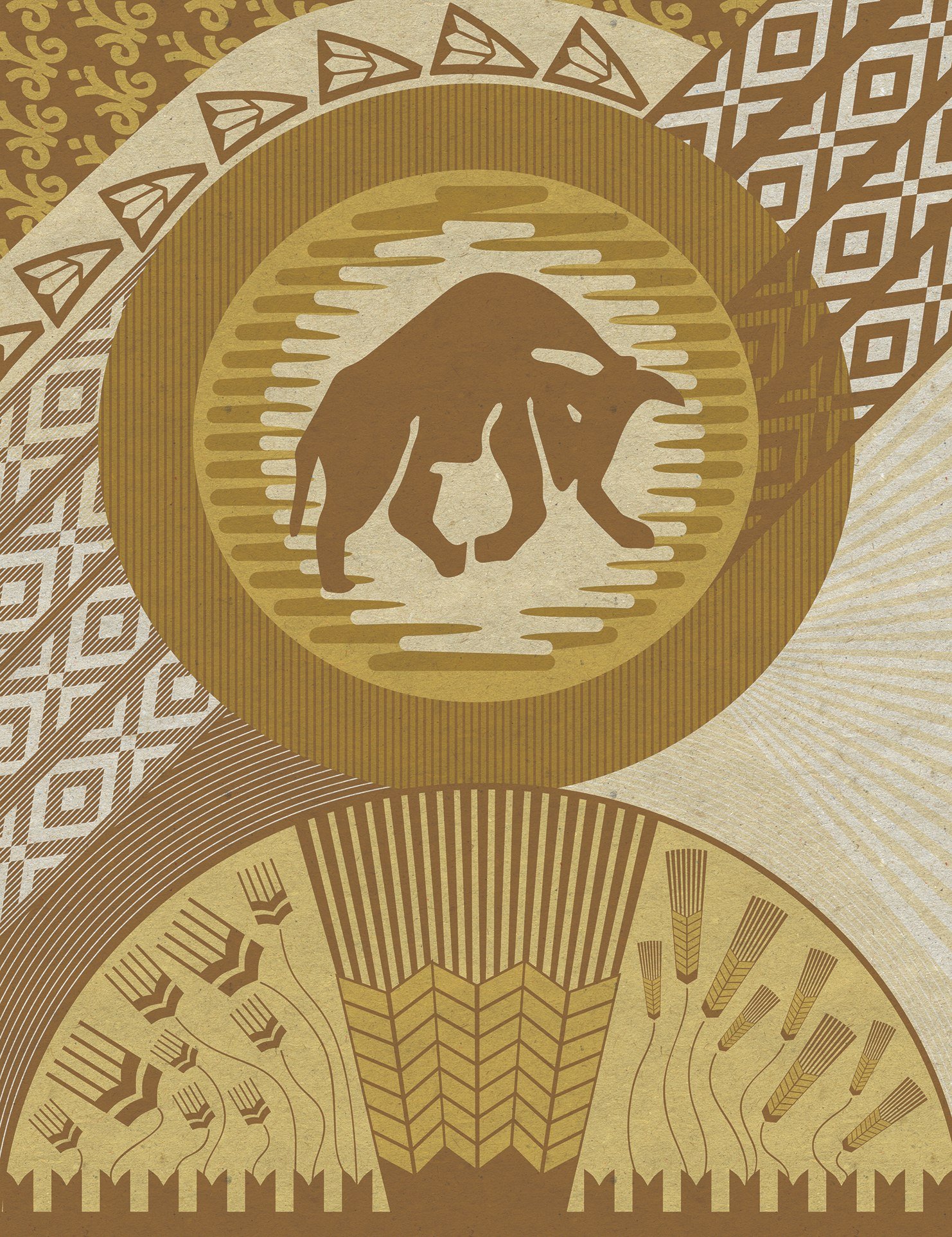
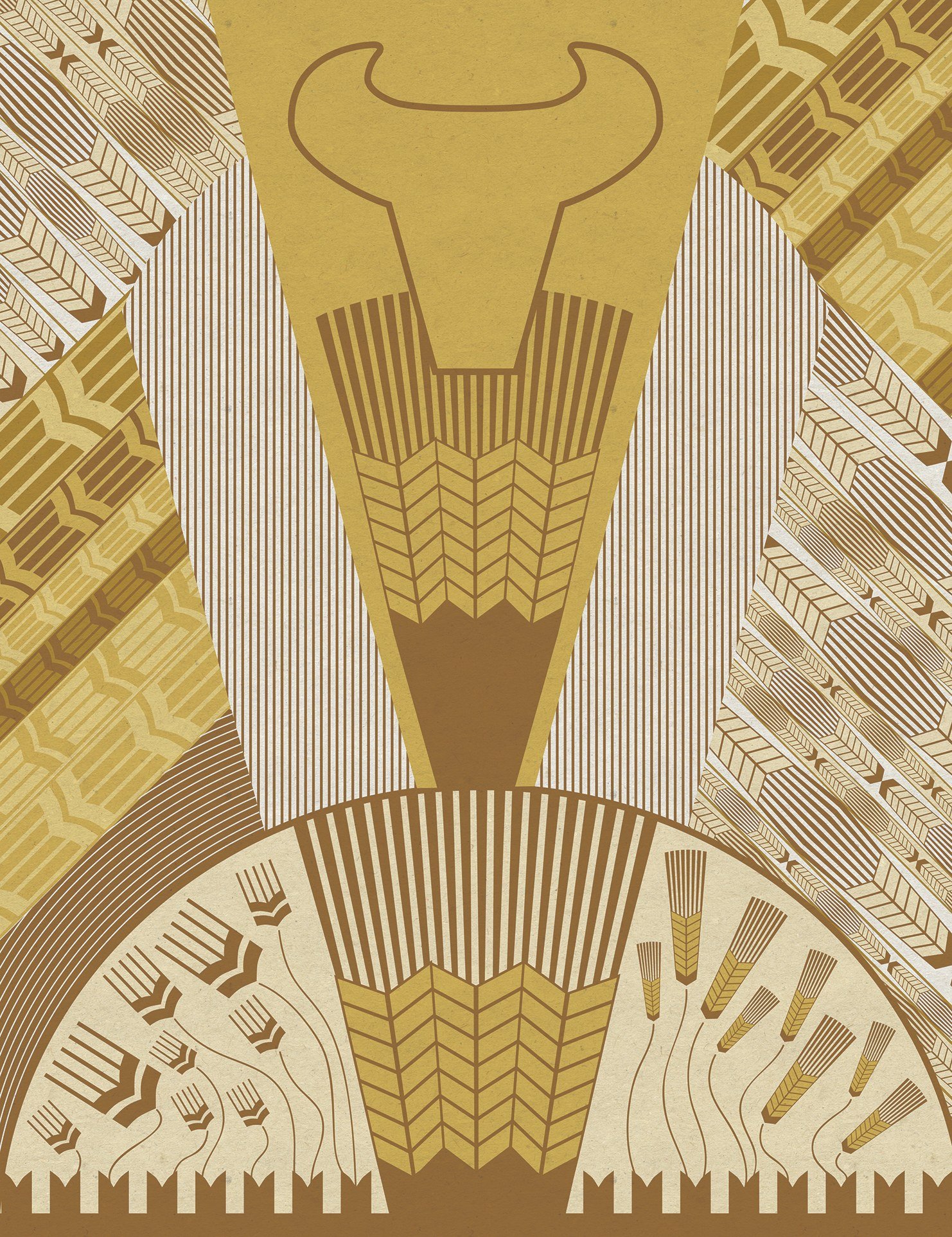
Each chapter opens with a custom illustration inspired by the visual symbols of the featured city or brewery. The illustrations were intentionally designed to be neutral and decorative, functioning almost as ornaments rather than narrative elements. Their purpose is to create a distinctive visual transition between chapters without introducing an additional layer of storytelling or competing with the book’s rich historical content.
Gold-and-cream illustration combining dense wheat patterns with three smiling figures holding hands, arranged in layered geometric bands.
Gold-and-cream illustration of a town skyline beside water, with sailboats, flying birds, flowing lines, and fields of grain.
Geometric gold-and-cream town illustration combining stylized buildings, waves, wheat, floral motifs, and traditional textile-like patterns.
Gold-and-cream illustration with waves, wheat fields, flying birds, a large sun, and a heraldic anchor flanked by animal figures.
Abstract gold-and-cream illustration with four swirling shapes containing stylized grain ears, surrounded by birds and geometric patterns.
Gold-and-cream illustration of rolling fields and wheat, with a small figure drinking from a mug in the upper corner and a circular folk motif below.
Symmetrical gold-and-cream illustration of layered fields filled with stylized wheat, framed by repeating grain and plant patterns.
Gold-and-cream illustration of two angular horses facing each other among patterned fields of wheat, with bold rays rising behind them.
Symmetrical gold-and-cream illustration centered on a geometric grain motif, surrounded by repeating stylized wheat patterns.
Gold-and-cream illustration featuring a large hop cone and hop leaves, framed by tall grain stalks and repeating folk-inspired patterns.
Gold-and-cream illustration of a bull’s head above a stylized white castle, framed by repeating wheat and grain motifs.
Gold-and-cream illustration featuring a bear inside a circular medallion, surrounded by geometric folk patterns and stylized fields of grain.
Gold-and-cream illustration dominated by a large bull’s head, with geometric wheat fields and repeating grain patterns arranged around it.