Start a Project
Kita Neries Pusė
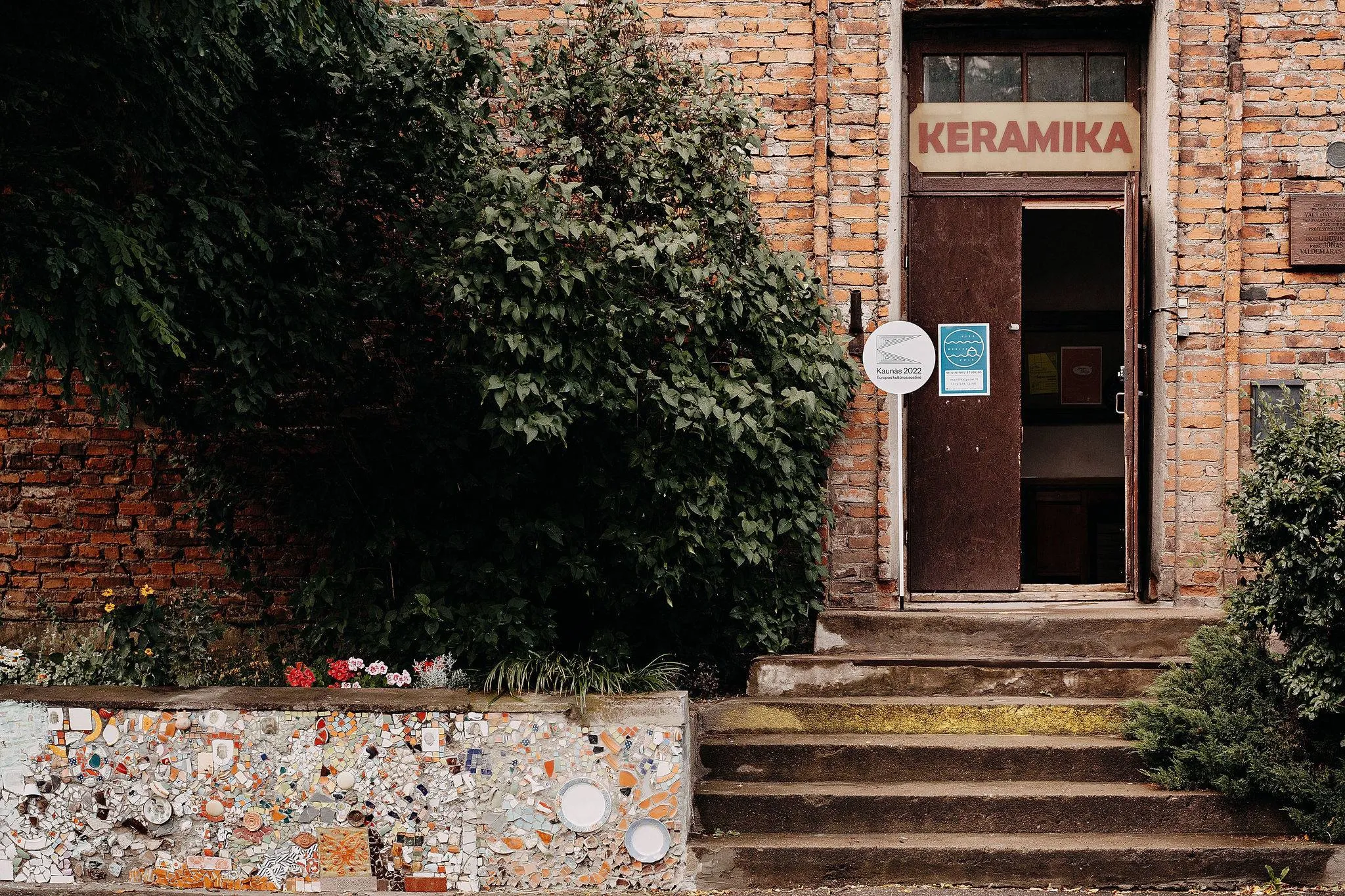
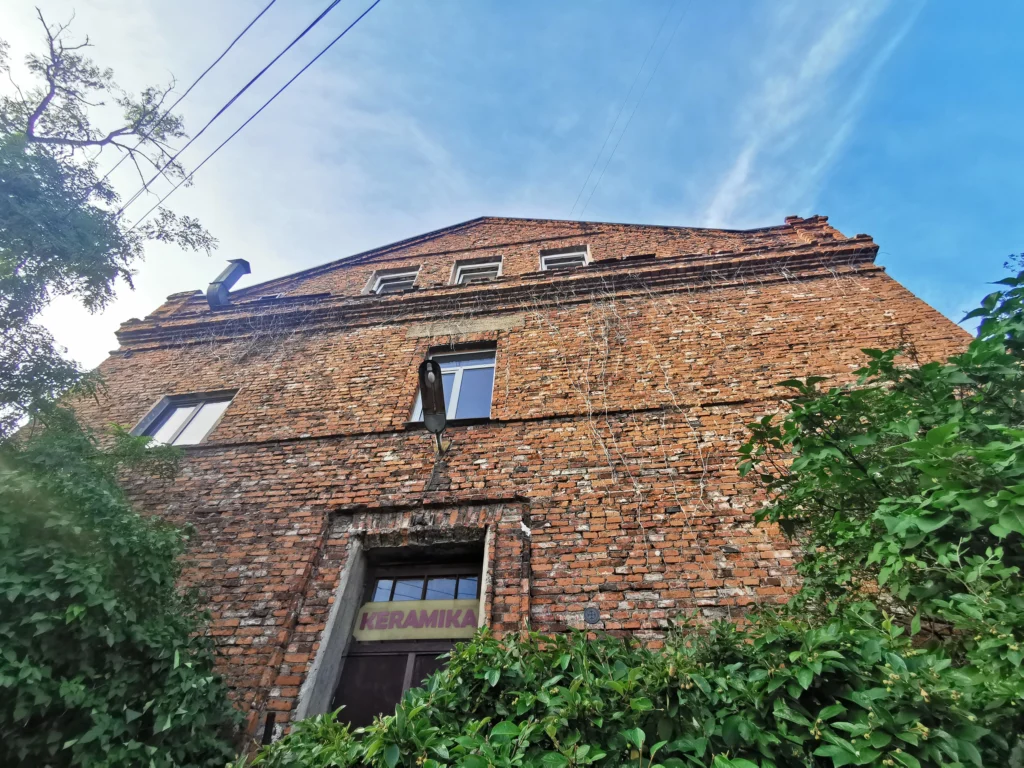
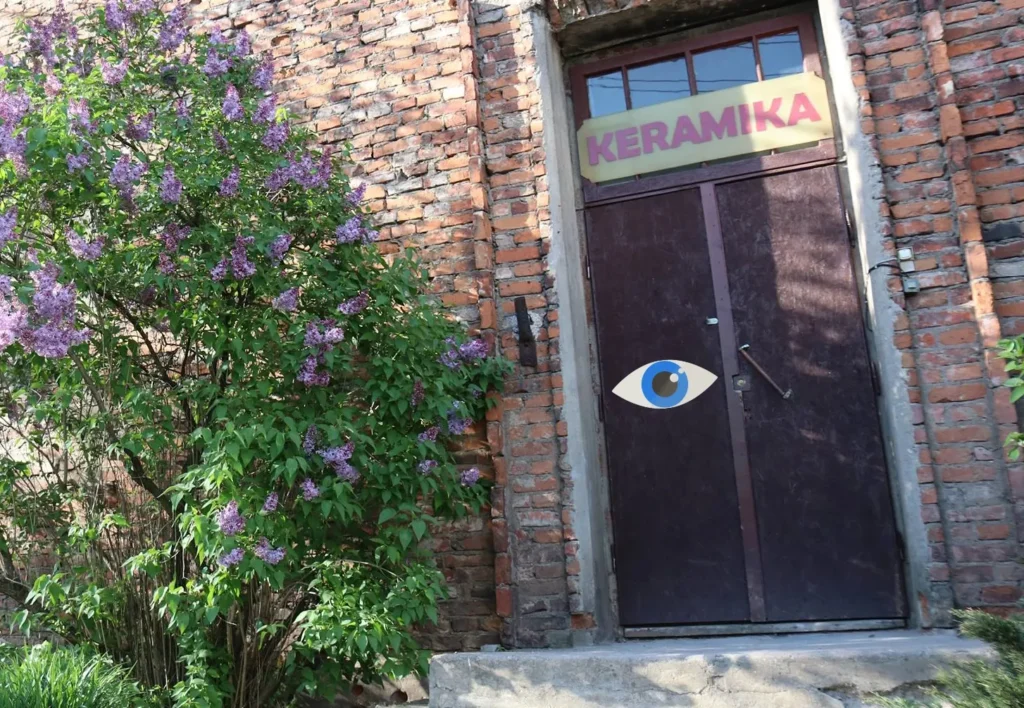
Entrance to the red-brick ceramics studio at “Kita Neries pusė,” surrounded by dense greenery and flowers. Steps lead to an open door beneath a large “KERAMIKA” sign, with a colorful ceramic mosaic decorating the low wall beside the entrance.
The art studio and community space Kita Neries pusė was created in a remarkable old ceramics studios in Kaunas. For a time, it became one of the most vibrant and creative places in the Vilijampolė district.
In collaboration with Kaunas 2022 – European Capital of Culture: development, facilitation, and activation of a community space, including community business initiatives, creative activities, and arts-based community engagement.
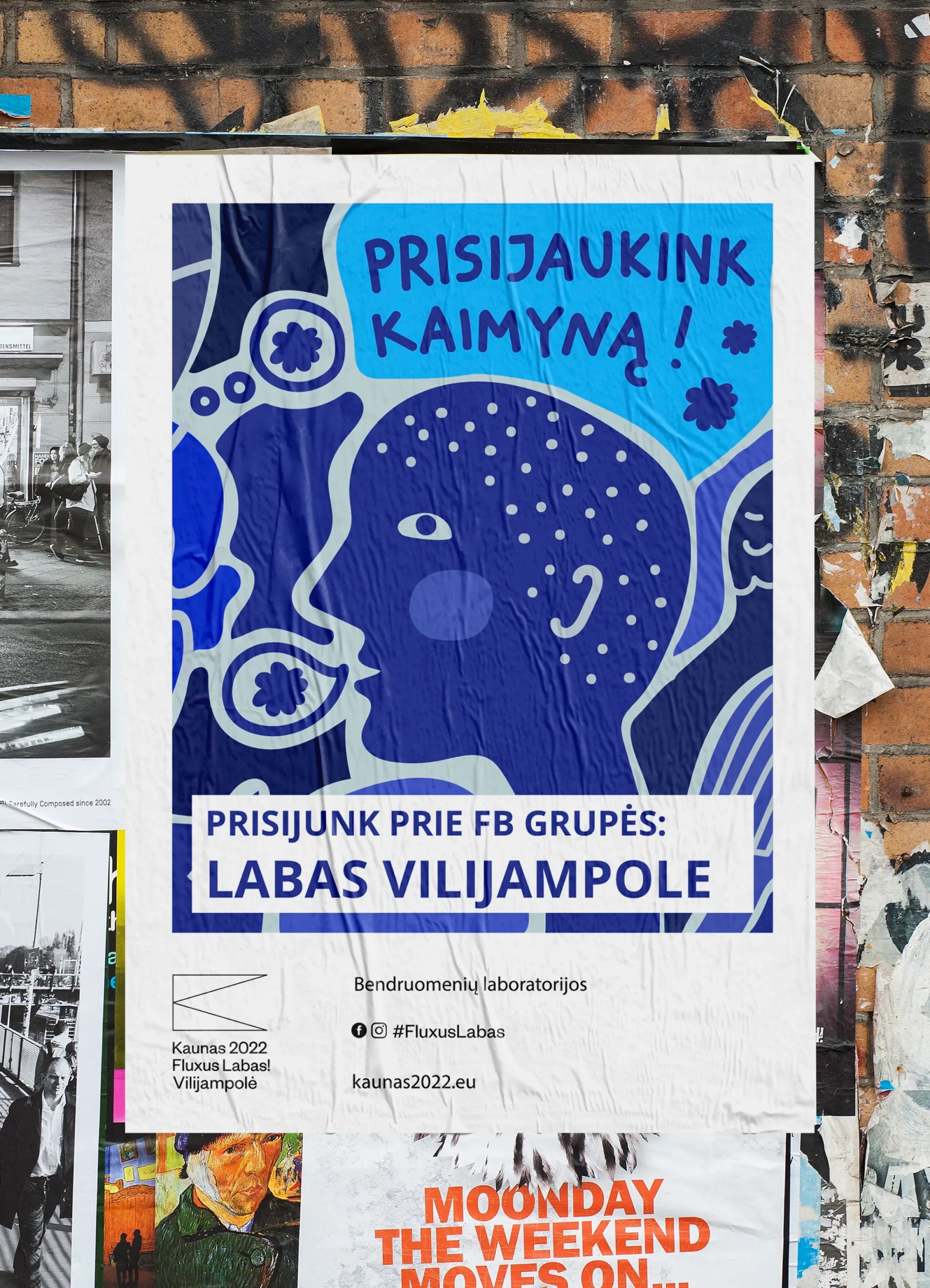
A large blue community poster is pasted onto a weathered brick wall among layers of other posters. Friendly abstract faces, flowers and whimsical creatures crowd together beneath the message “Prisijaukink kaimyną!” (“Get to know your neighbour!”). Below, bold text invites residents to join the Facebook group “Labas Vilijampole.”
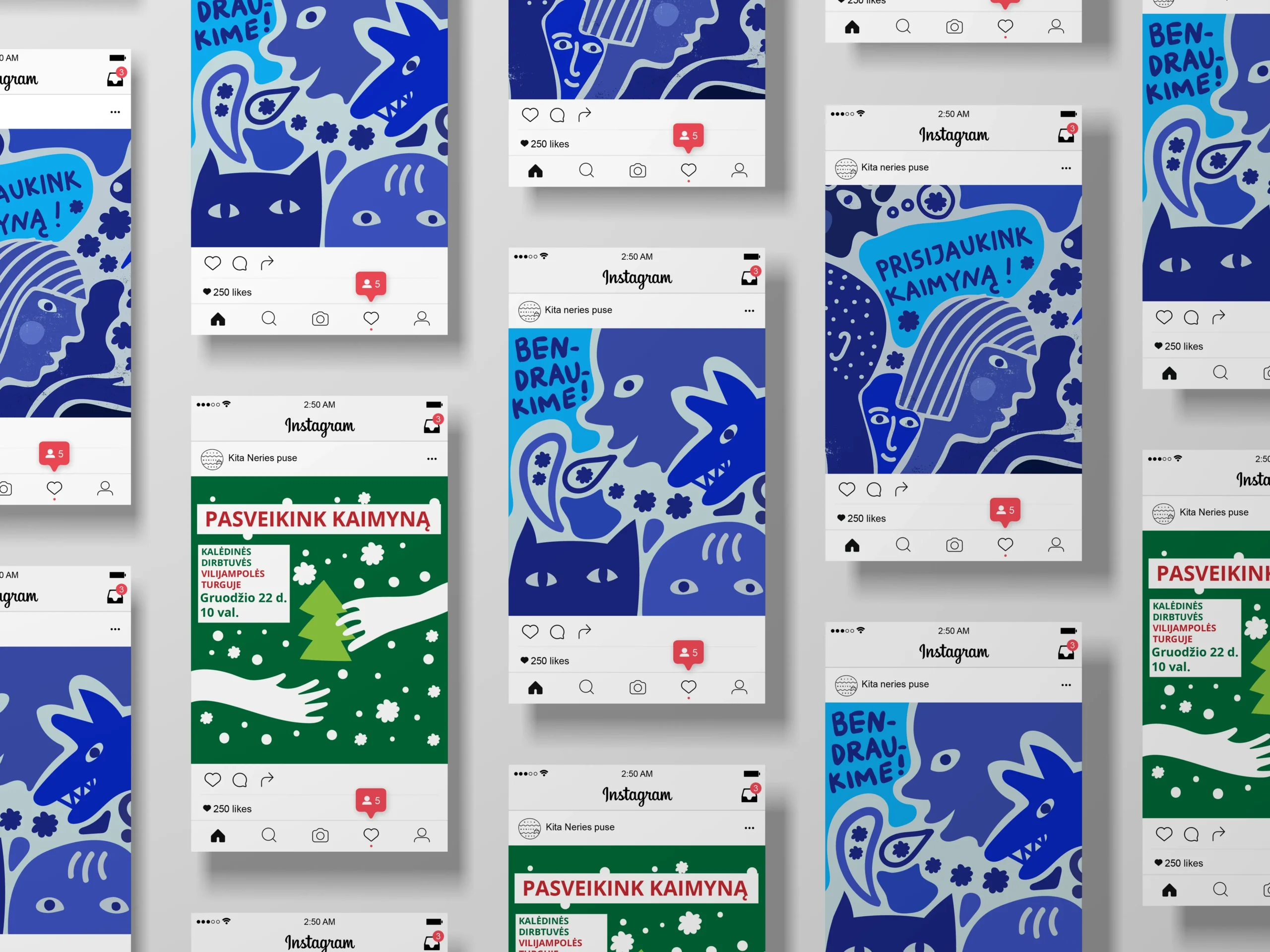
A collage of Instagram-style posts promoting the Vilijampolė neighbourhood community. Playful blue illustrations show abstract neighbours, faces, flowers and animals alongside the Lithuanian phrases “Prisijaukink kaimyną!” (“Get to know your neighbour!”) and “Bendraukime!” (“Let’s connect!”). Green Christmas-themed posts invite residents to greet their neighbours and join community activities.
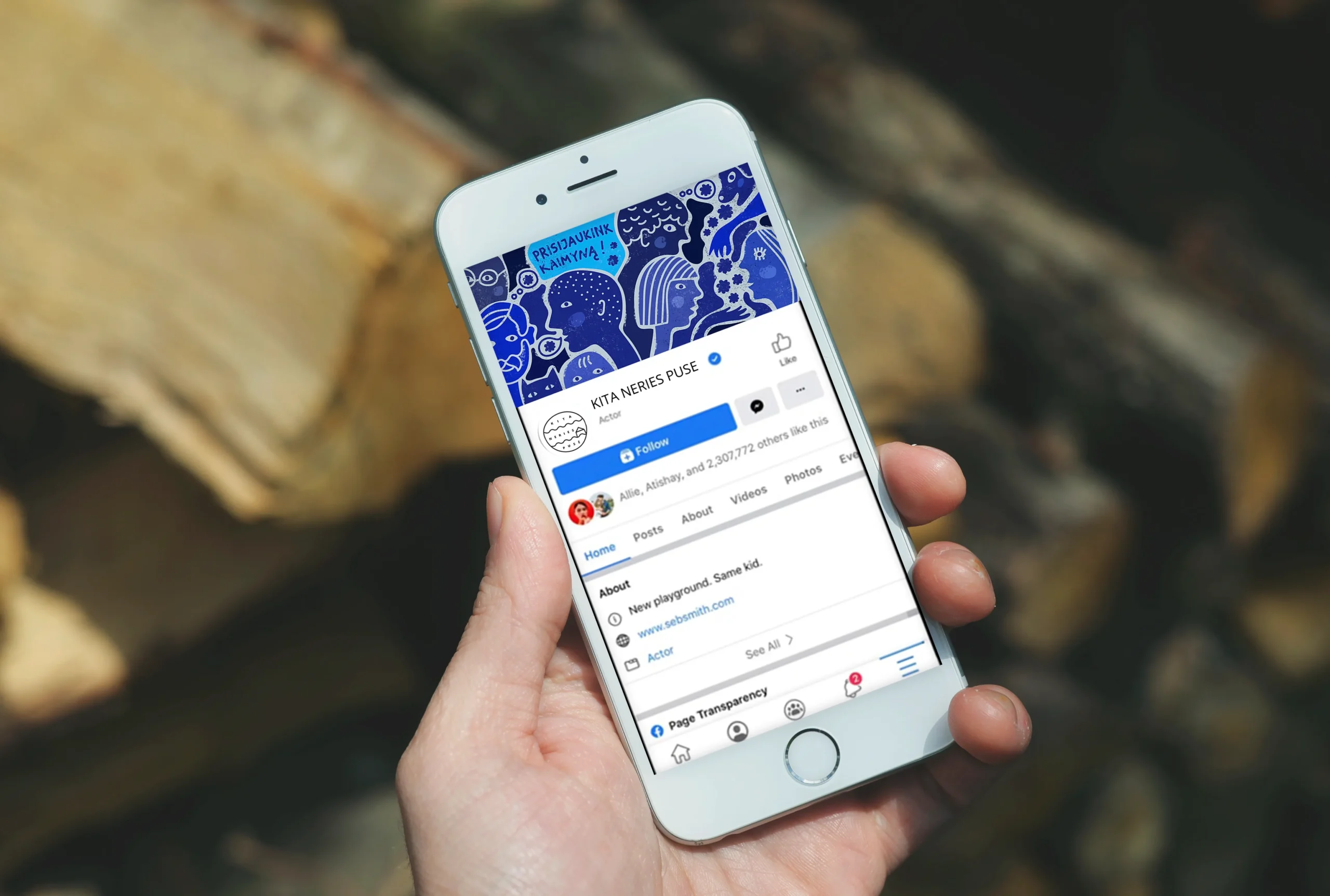
A hand holds a smartphone displaying the “Kita Neries pusė” community page. Its blue illustrated banner is filled with playful faces and neighbourhood characters and includes the message “Prisijaukink kaimyną!” (“Get to know your neighbour!”), encouraging residents to connect with one another.
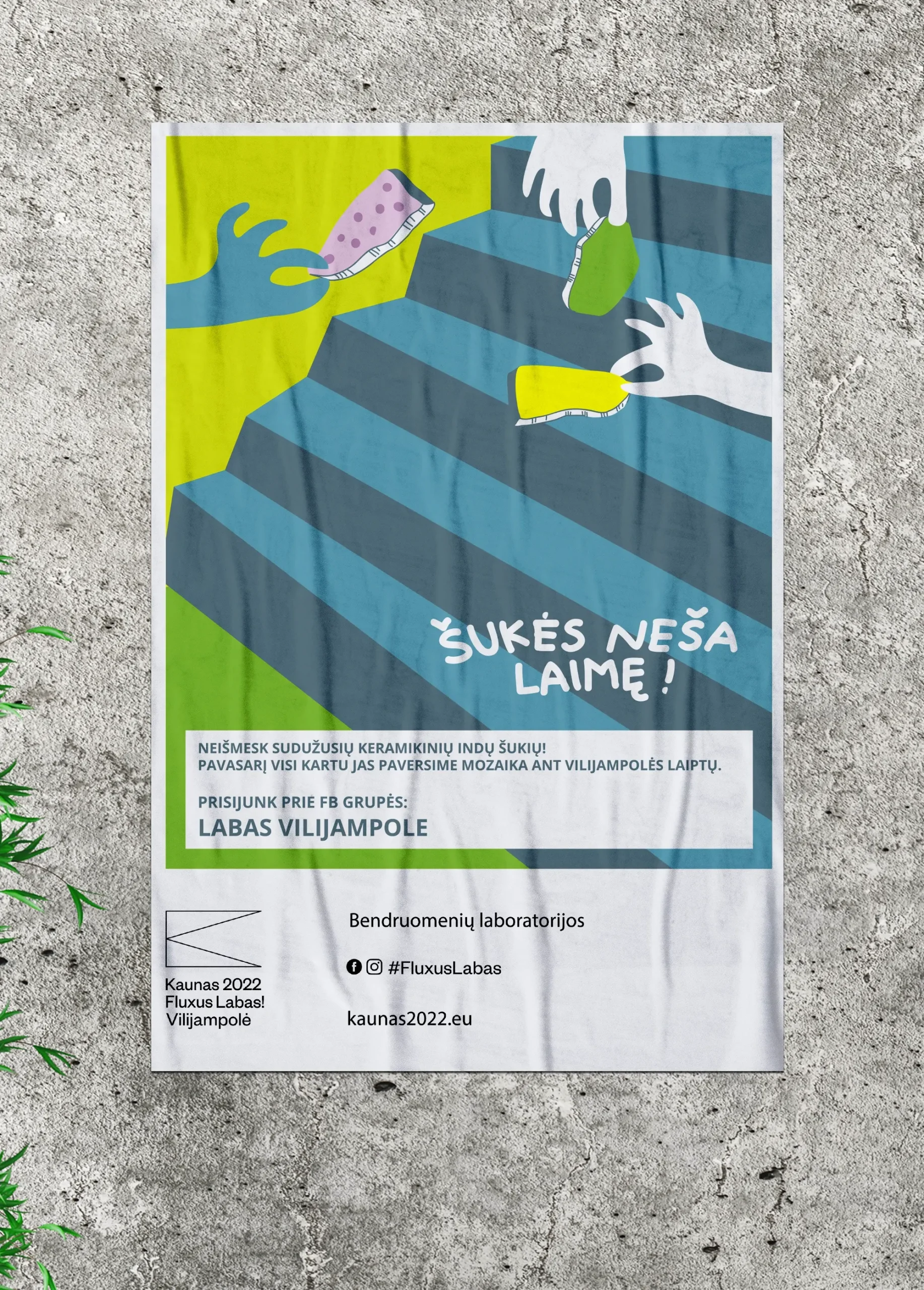
A colourful poster on a concrete wall shows several illustrated hands carrying broken pieces of ceramic dishes up a striped staircase. Large text reads “Šukės neša laimę!” (“Broken pieces bring good luck!”). The poster asks residents not to throw away broken ceramic dishes, but to save them for a community mosaic on the Vilijampolė steps in spring. It also invites people to join the Facebook group “Labas Vilijampole” and includes “Kaunas 2022 Fluxus Labas! Vilijampolė,” “Bendruomenių laboratorijos,” “#FluxusLabas,” and “kaunas2022.eu.”
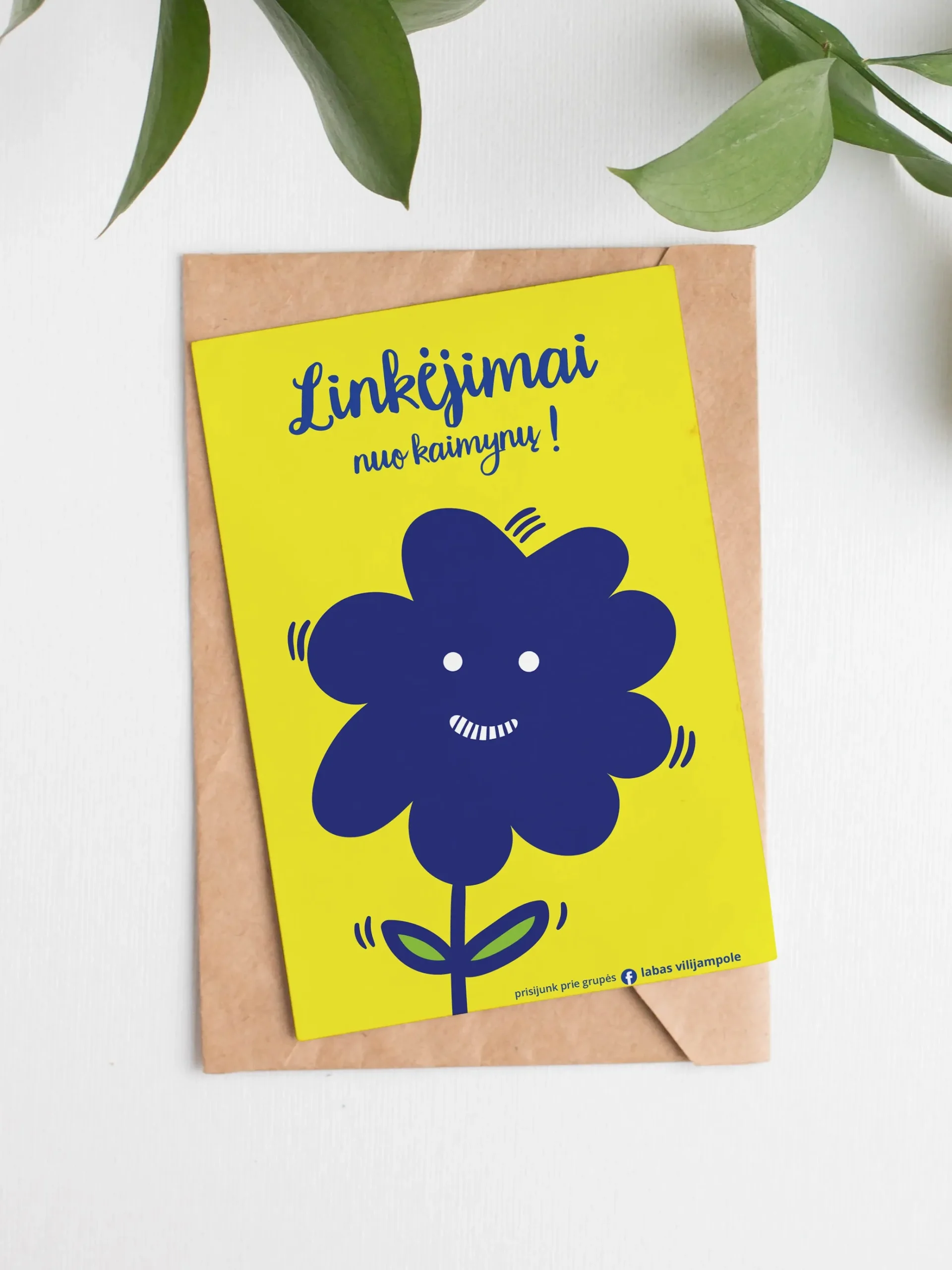
A bright yellow greeting card rests on a brown paper envelope beneath green leaves. A cheerful dark-blue flower with a smiling face fills the centre. The Lithuanian text reads “Linkėjimai nuo kaimynų!” (“Greetings from the neighbours!”), with a small invitation at the bottom to join the Facebook group “Labas Vilijampole.”
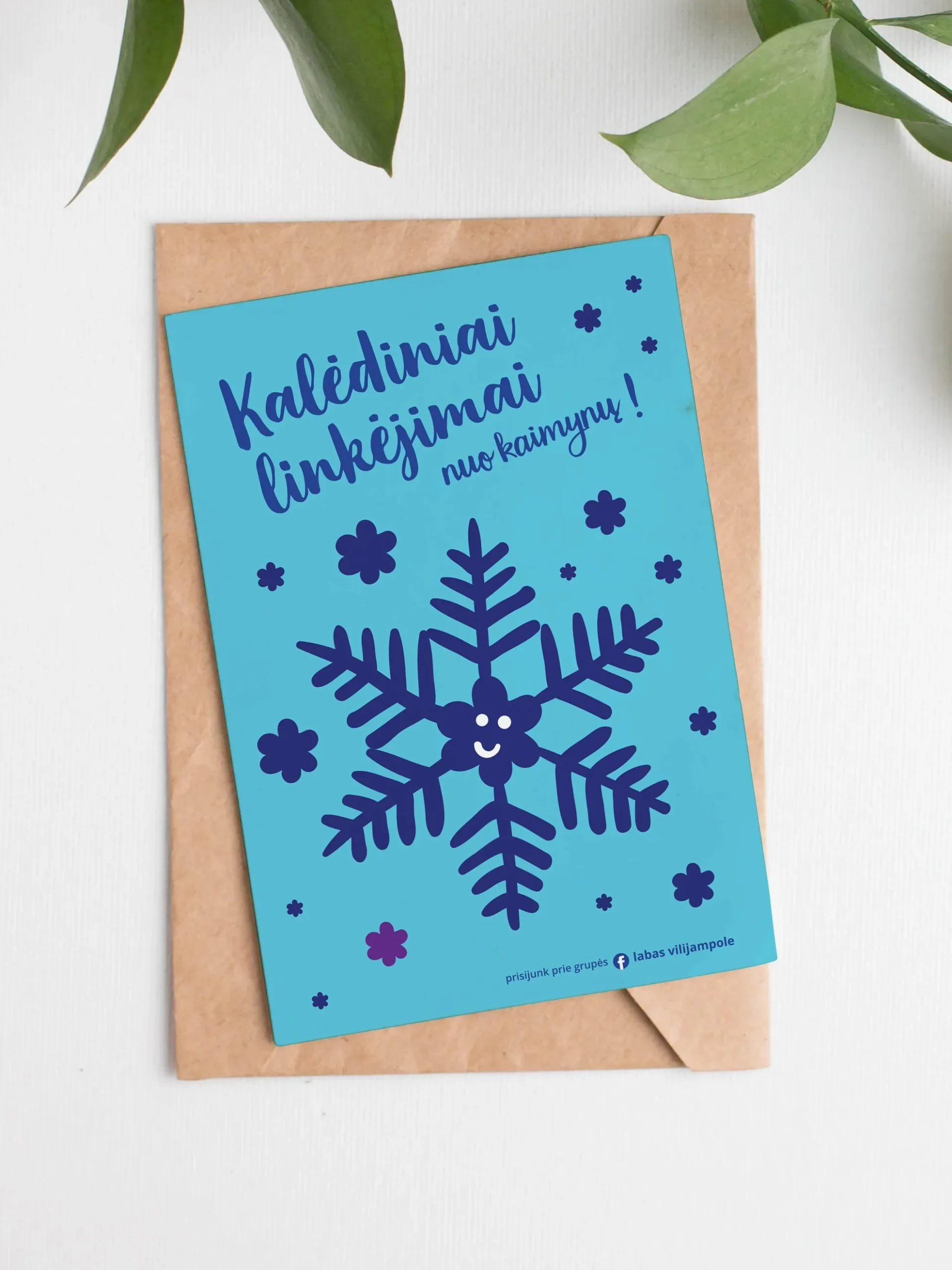
A turquoise greeting card on a brown envelope features a large dark-blue snowflake with a tiny smiling face, surrounded by smaller decorative snowflakes. The text reads “Kalėdiniai linkėjimai nuo kaimynų!” (“Christmas greetings from the neighbours!”), with an invitation to join the Facebook group “Labas Vilijampole.”
It all started with community building. How do you invite people to take an active role in shaping their own neighbourhood?
Vilijampolė, with its colourful history and stories of the local mafia, inspired the idea and visual concept “Get to Know Your Neighbour.” The process began with conversations — with long-established communities, libraries, local businesses, and other people connected to the district. Postcards were distributed, invitations were sent out, and meetings were organised in different neighbourhood spaces. Until eventually...
We found an amazing old ceramics building already full of artists—and it became the home of "The Other Side of Neris" studio and community space.
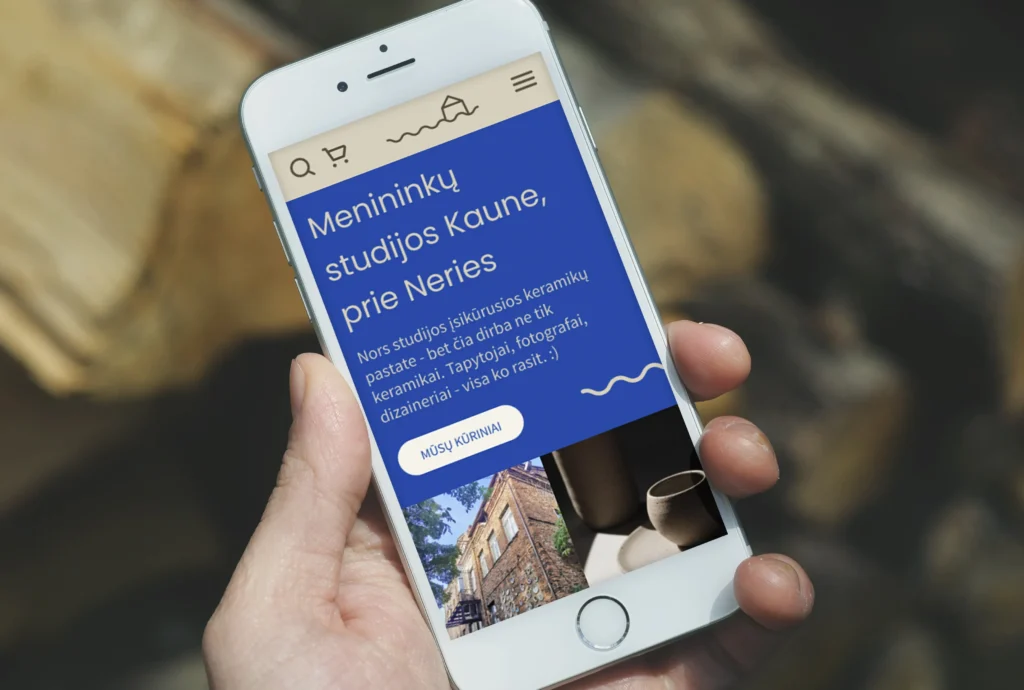
Vilijampolė has always been, from Kaunas view, on the other side of the Neris River. That simple idea inspired the name and became the foundation of the visual identity: the Neris + ceramics + community.
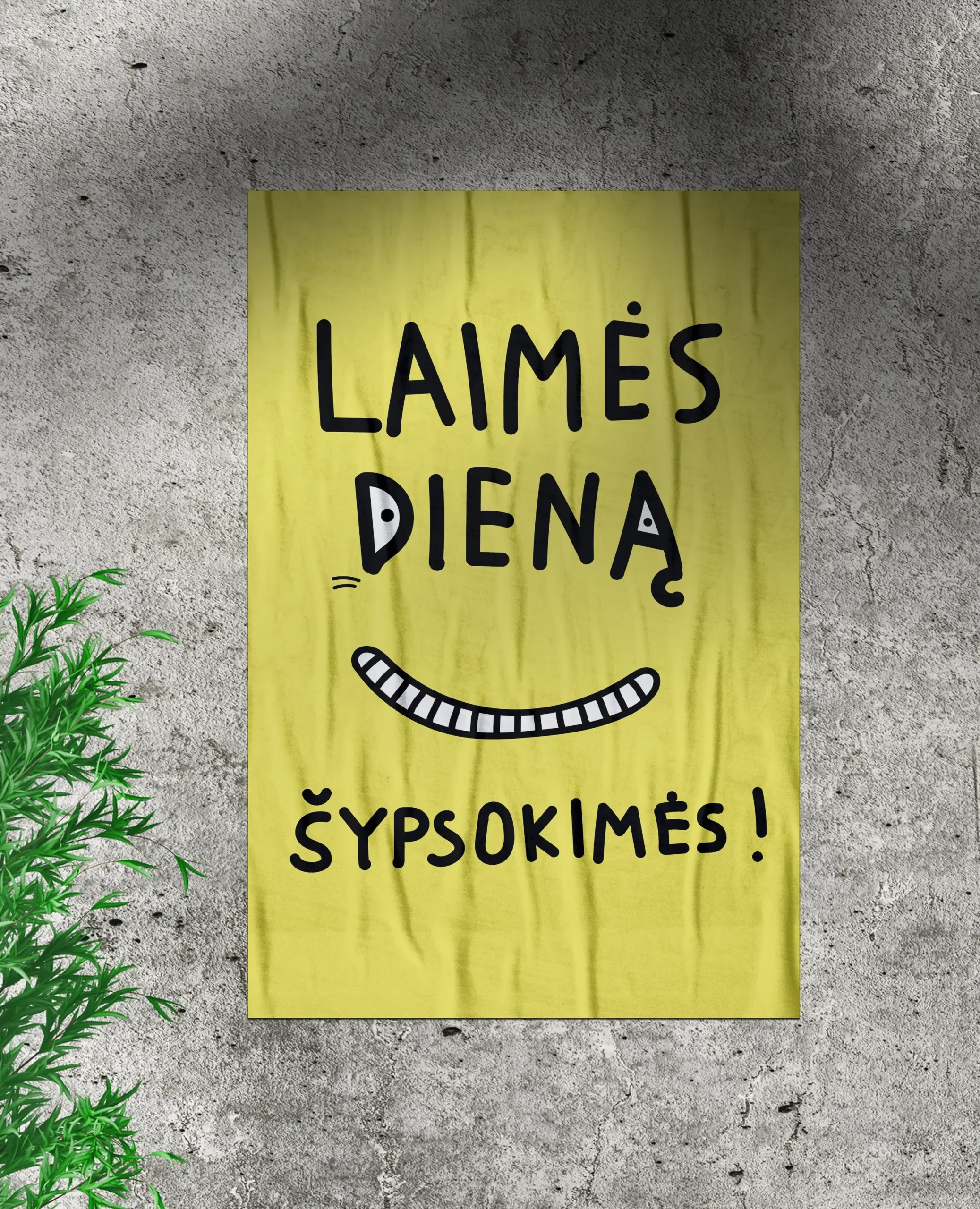
A bright yellow poster on a grey concrete wall features playful black lettering and a wide illustrated smile. The text reads: “LAIMĖS DIENA. ŠYPSOKIMĖS!” (“Day of Happiness. Let’s smile!”).
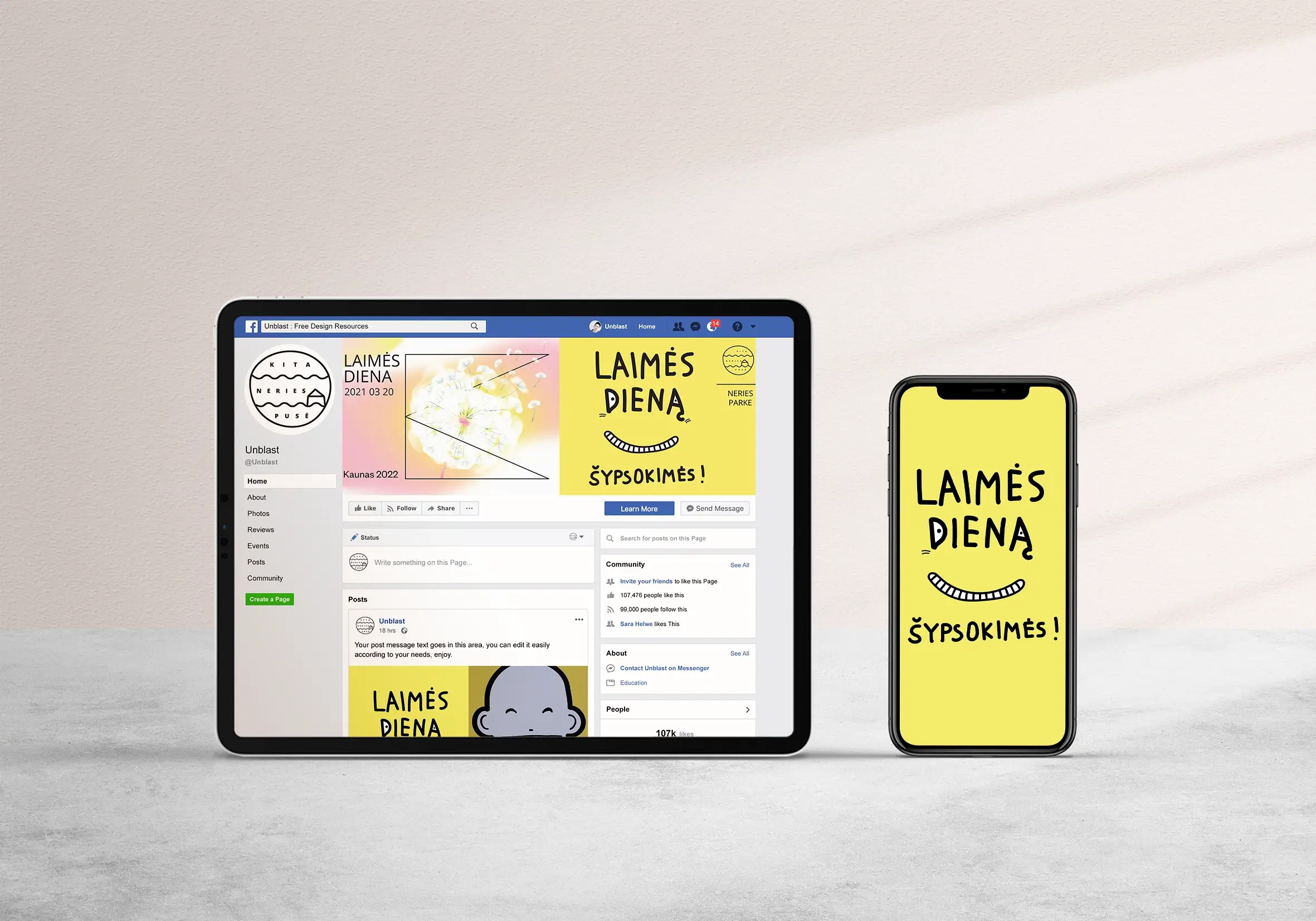
A tablet and smartphone display bright yellow graphics for the “Day of Happiness” event. The phone screen reads “LAIMĖS DIENA. ŠYPSOKIMĖS!” (“Day of Happiness. Let’s smile!”) with a simple curved smile illustration.
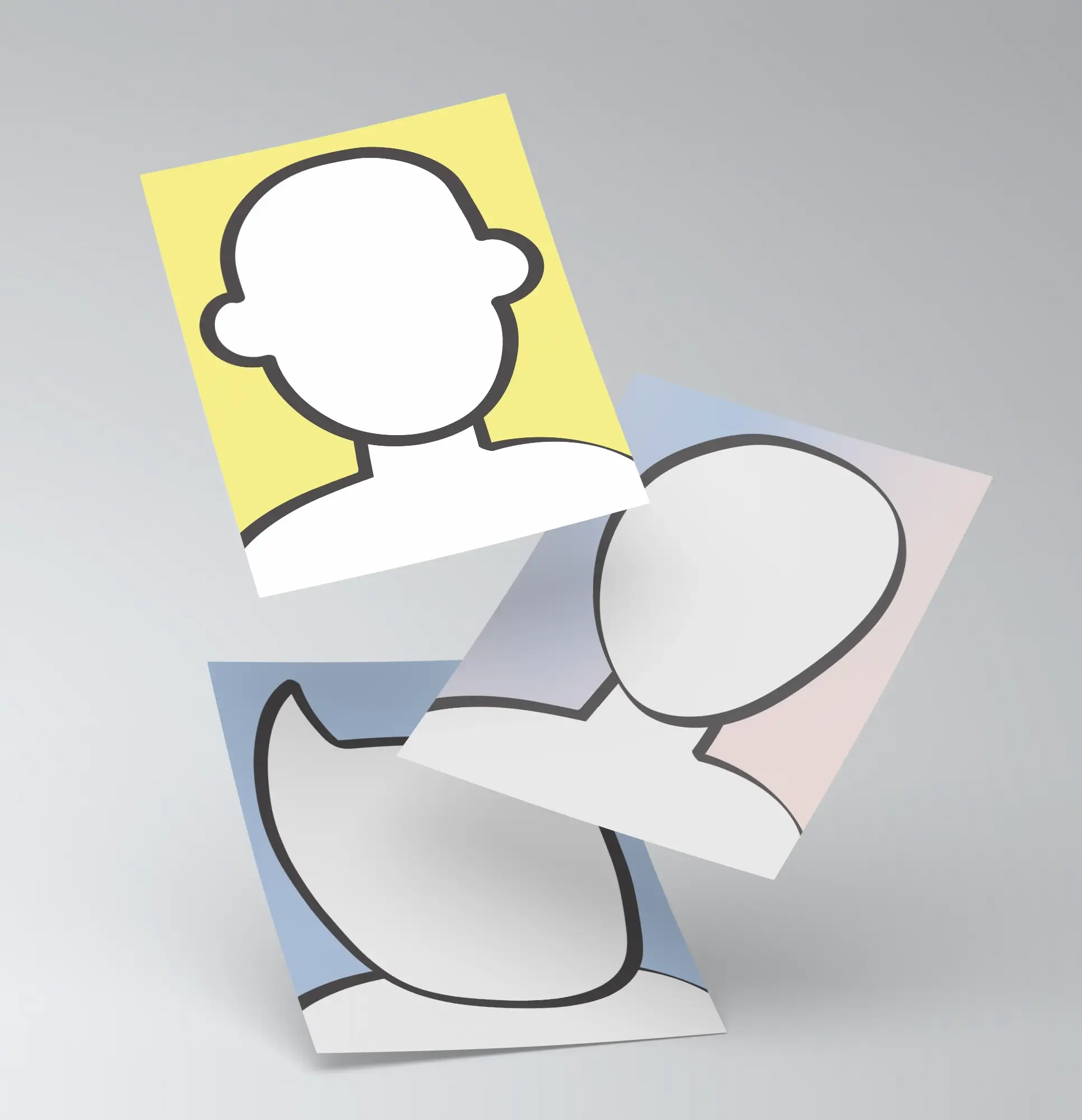
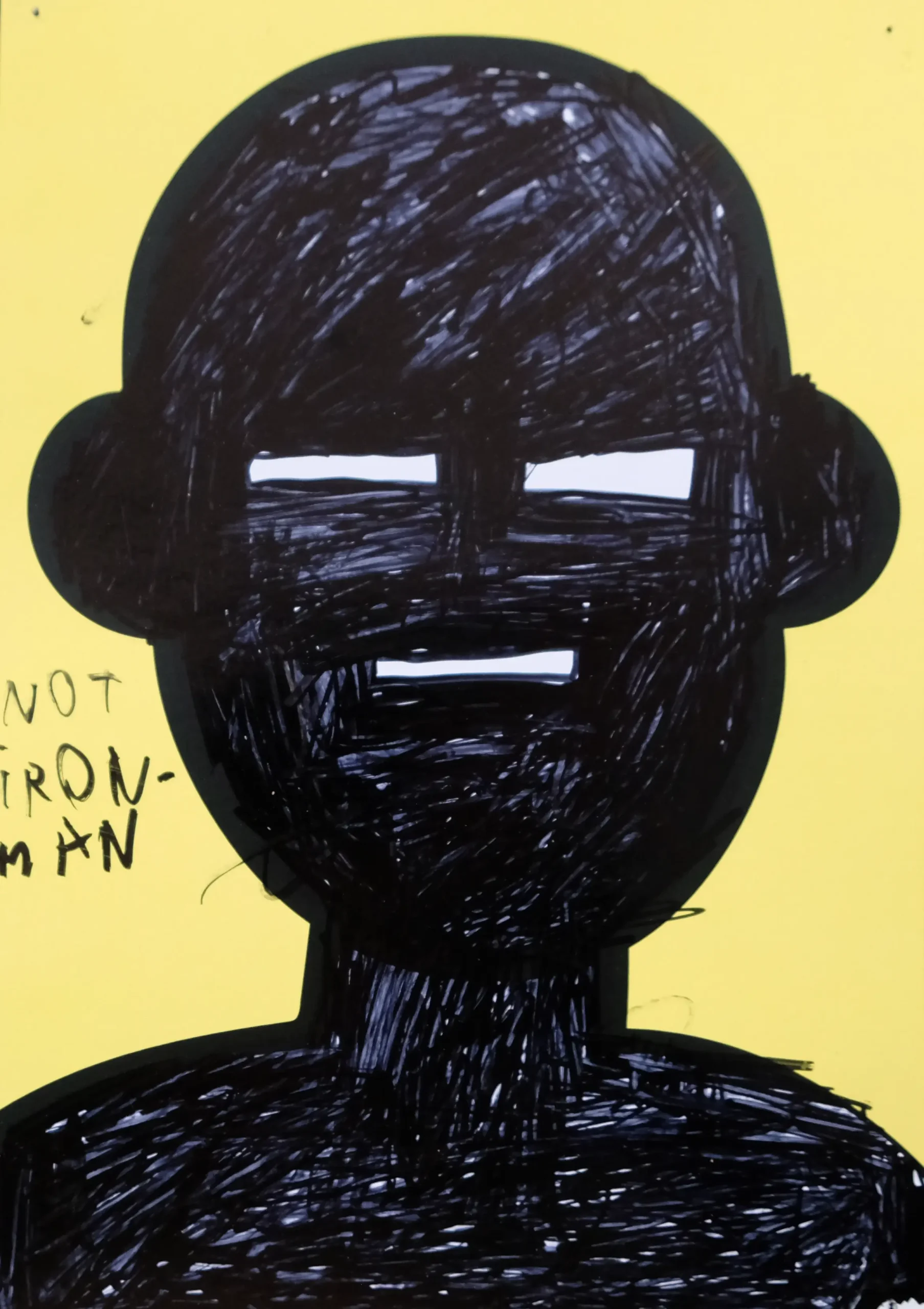
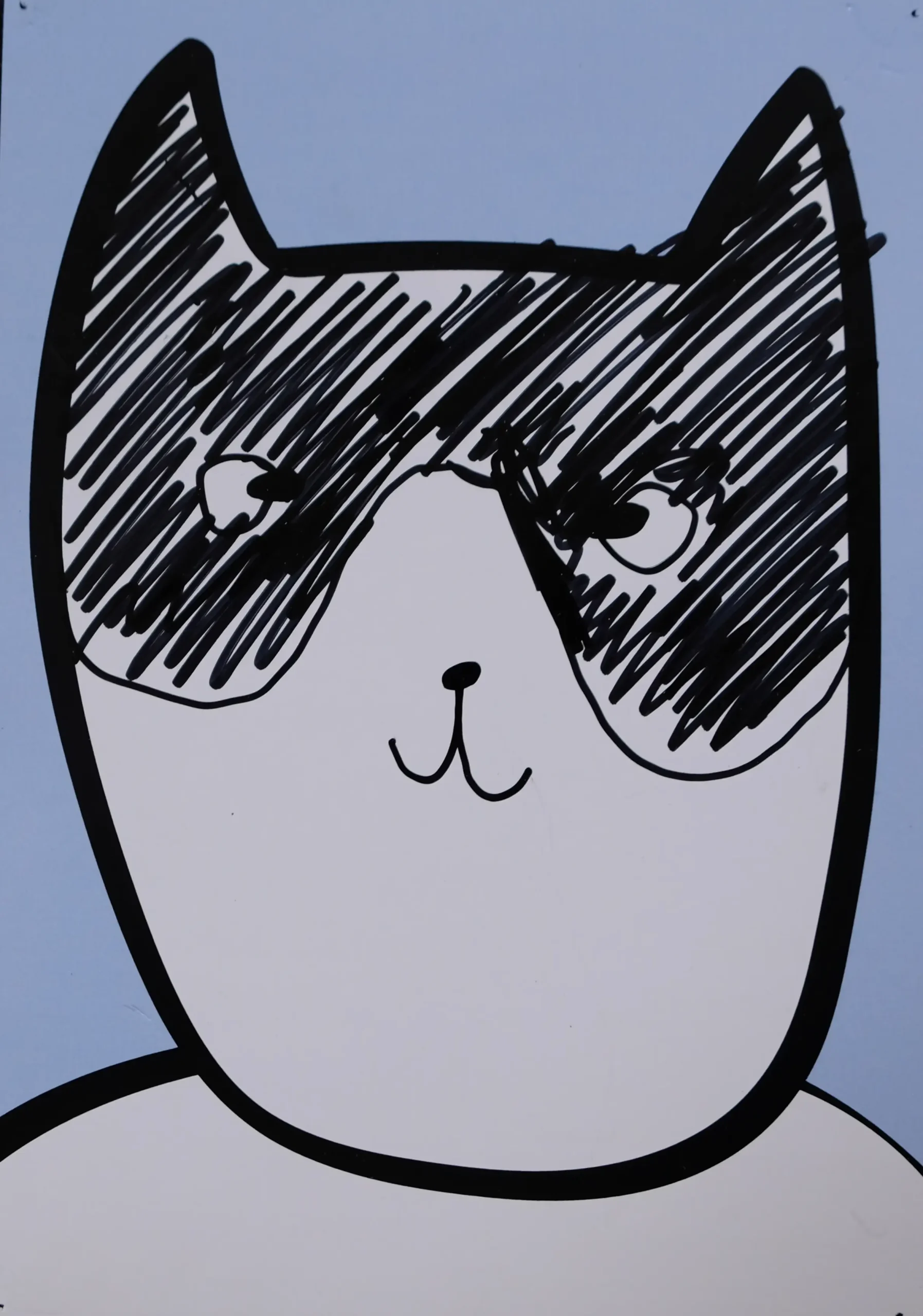
Three overlapping cards show simple, thick black outlines of blank human and cat portraits against soft yellow, blue, and pink backgrounds, ready for participants to add their own faces and details.
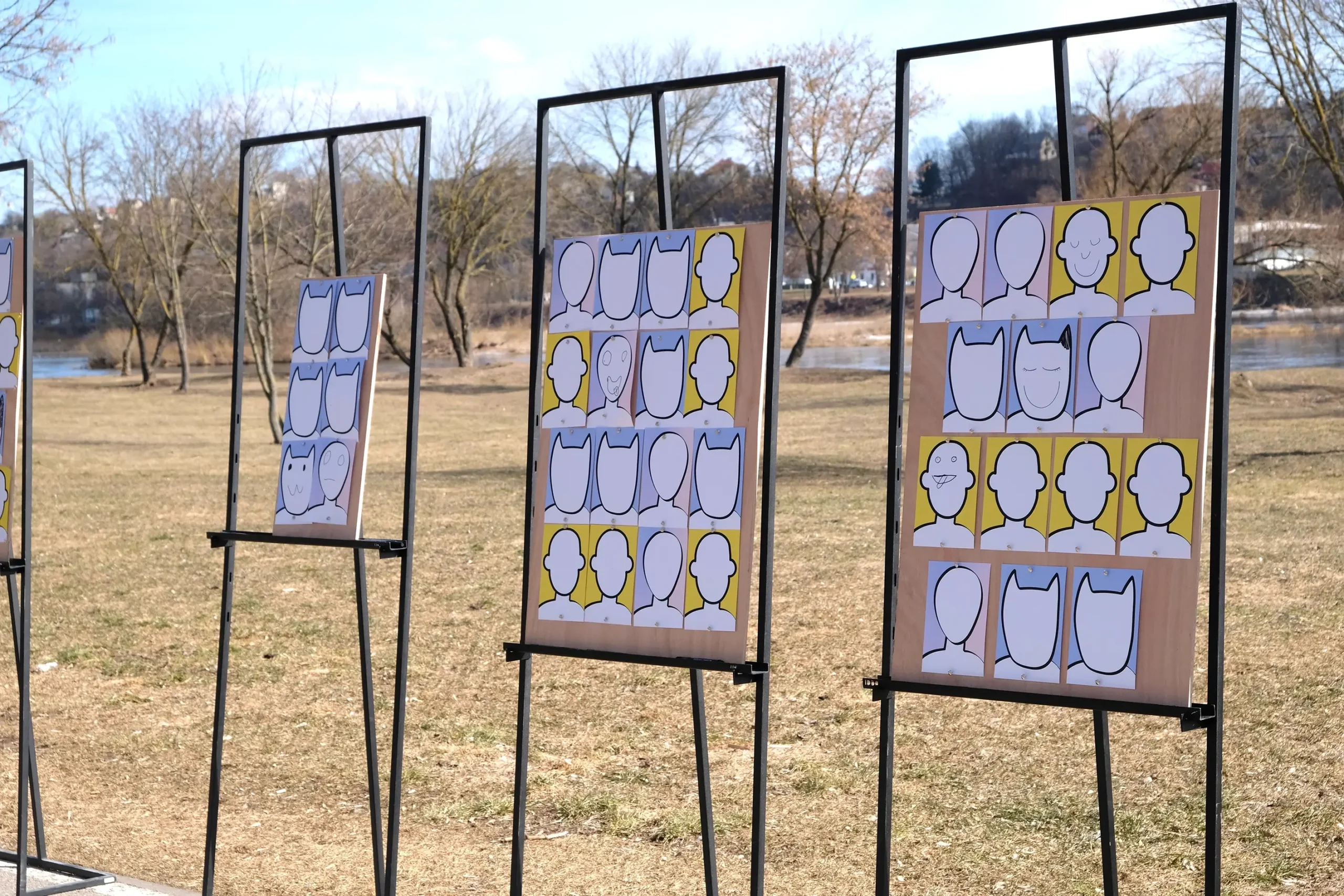
Black metal display frames stand in a park beside the river, holding grids of simple human and cat portrait templates. Some blank faces have already been transformed with hand-drawn eyes, smiles, and other playful details.
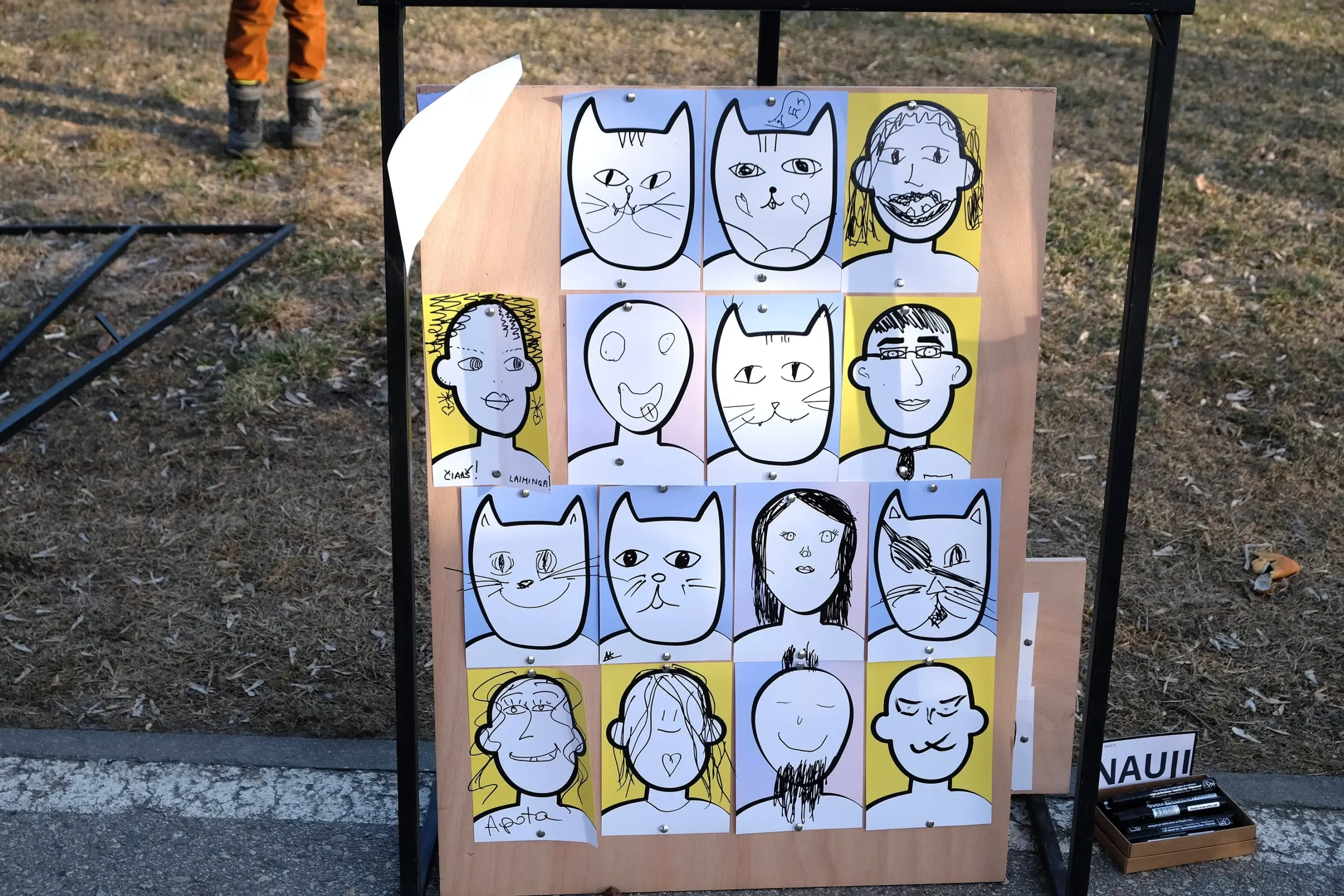
A wooden board displays sixteen hand-drawn human and cat portraits created from simple templates. Participants have filled them with expressive faces, hairstyles, glasses, whiskers, moustaches, and plenty of quirky personality.
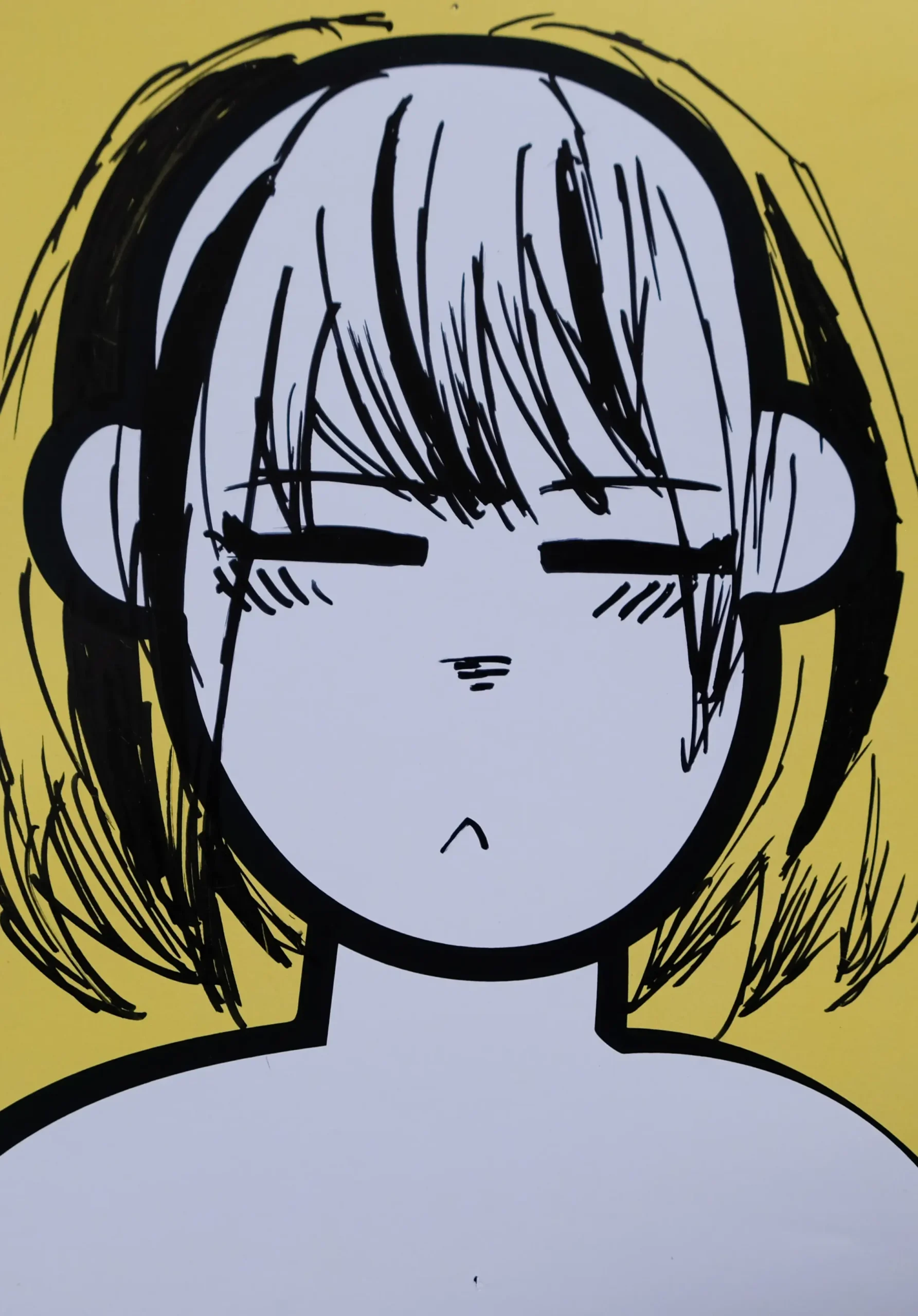
A stylized face drawn in thick black marker on a yellow background, with closed eyes, a small downturned mouth, and loose, energetic lines forming a bob haircut and long fringe.
A human portrait on a yellow background is almost completely filled with energetic black marker strokes. Narrow white areas remain around the eyes and mouth, creating a striking, graphic expression.
Close-up of a simple cat portrait drawn in black marker on a pale blue background. The cat has pointed ears, large eyes, a tiny nose, and boldly scribbled dark markings around its eyes and ears.
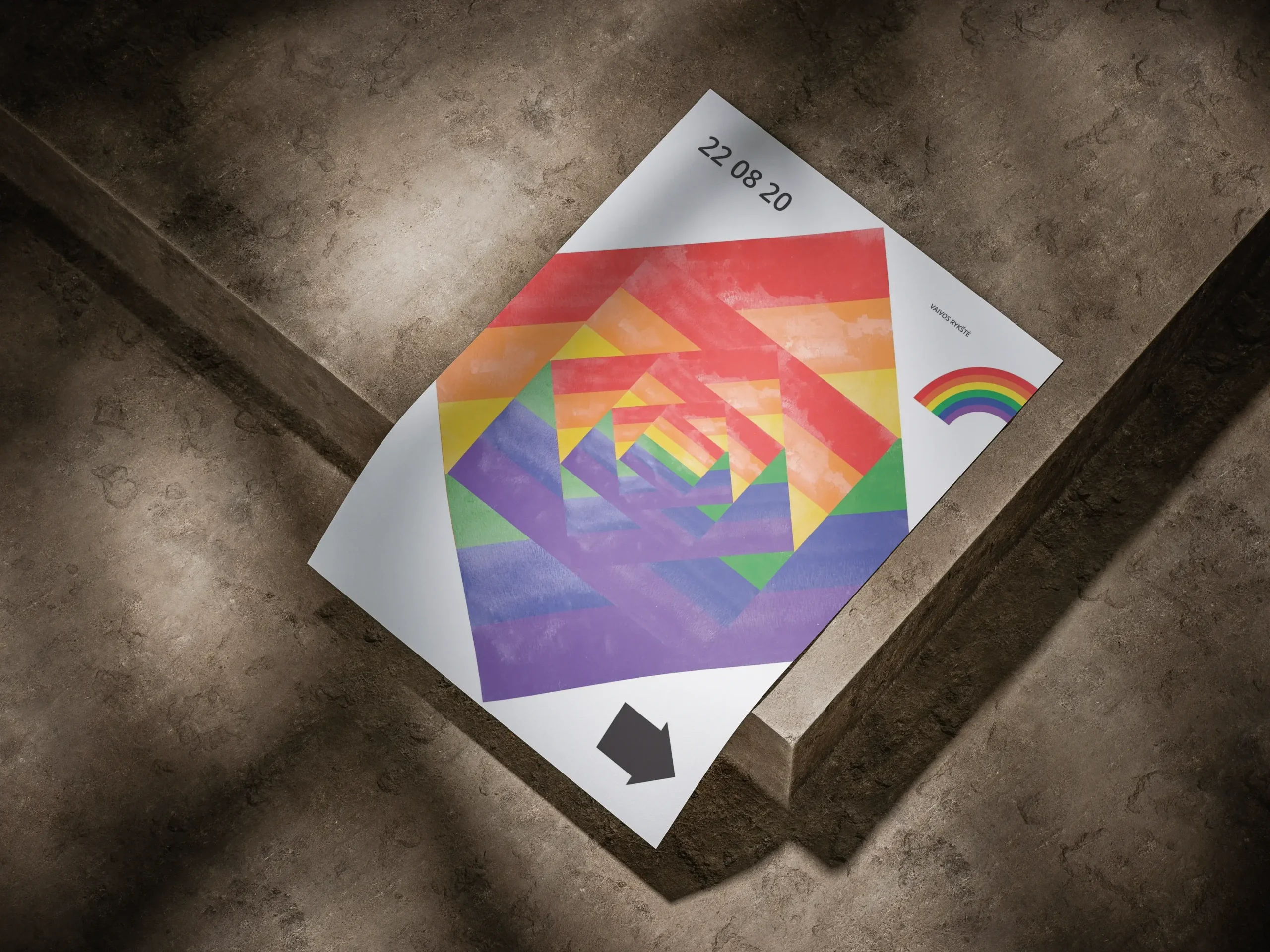
Some of the most exciting projects were community exhibitions that brought together professional artists and people from across the neighbourhood. One of them was “Vaivos rykštė” (Rainbow), a collaborative exhibition developed through a series of workshops titled “What Colour Do You Like Most?”
Each meeting and workshop explored a different colour. The resulting works were brought together in a shared painting and design exhibition at our studio.
“Rainbow” exhibition poster lying on concrete steps in sunlight. The poster features a tunnel-like geometric rainbow composition, the date “22 08 20,” a small rainbow symbol, the text “VAIVOS RYKŠTĖ,” and a black arrow pointing downward.
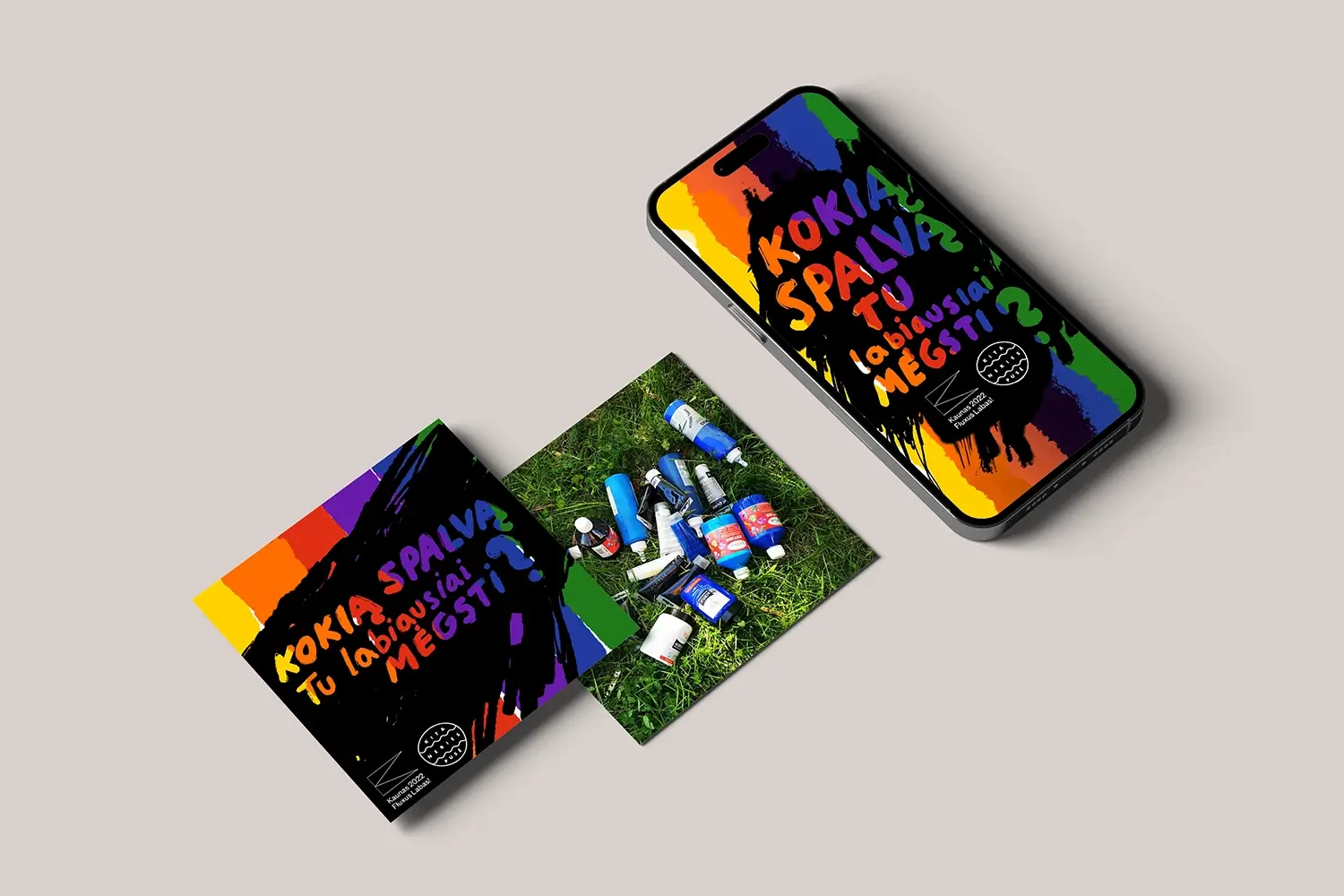
Smartphone and printed cards displaying the colorful workshop design with the Lithuanian question “KOKIĄ SPALVĄ TU LABIAUSIAI MĖGSTI?” (“What color do you like the most?”). A photograph of assorted paint bottles lying on grass is placed between the cards.
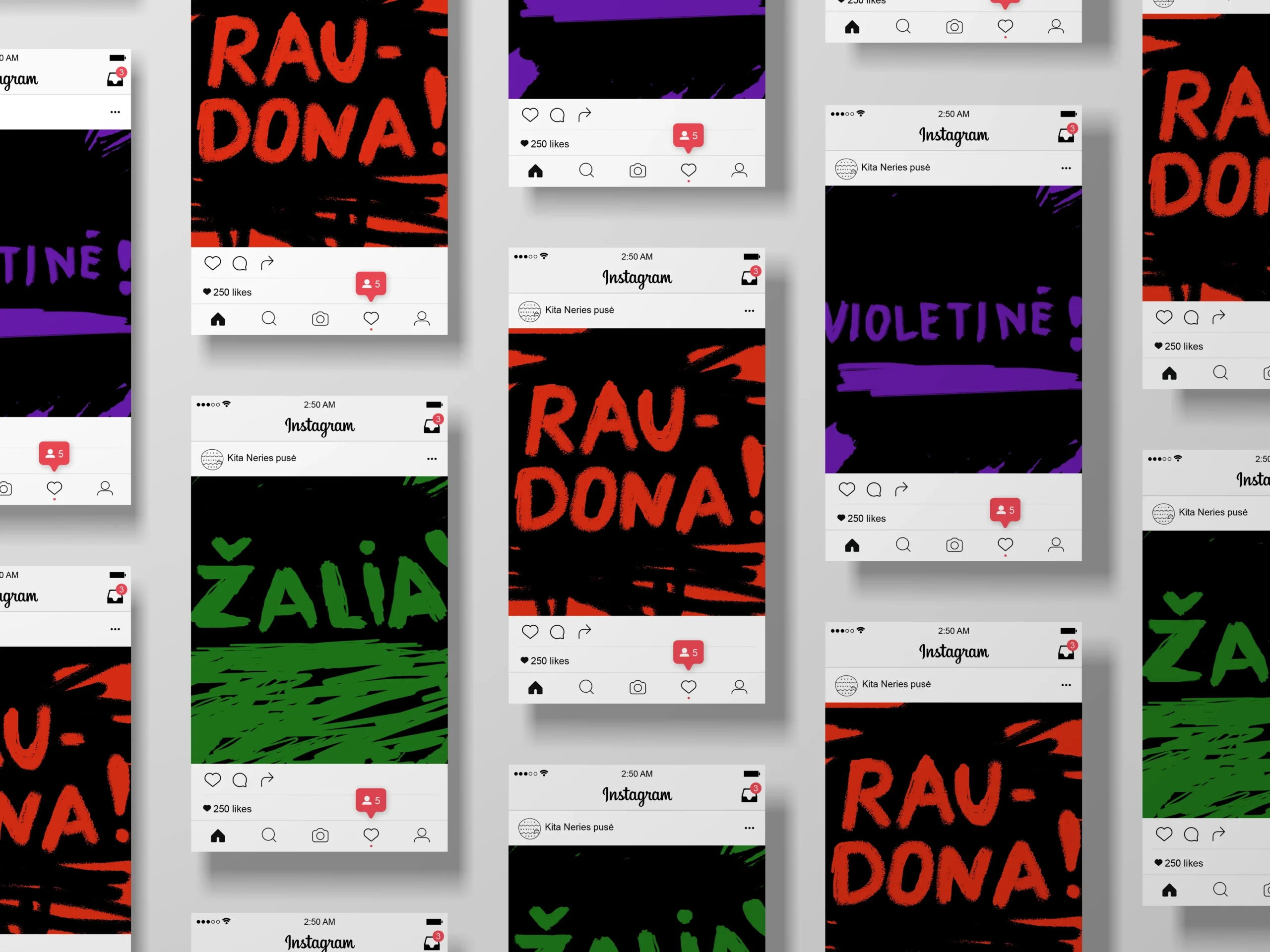
Collage of Instagram-style posts with expressive painted lettering in red, purple and green on black. Visible words include “RAUDONA!” (“Red!”), “VIOLETINĖ!” (“Purple!”) and “ŽALIA” (“Green”).
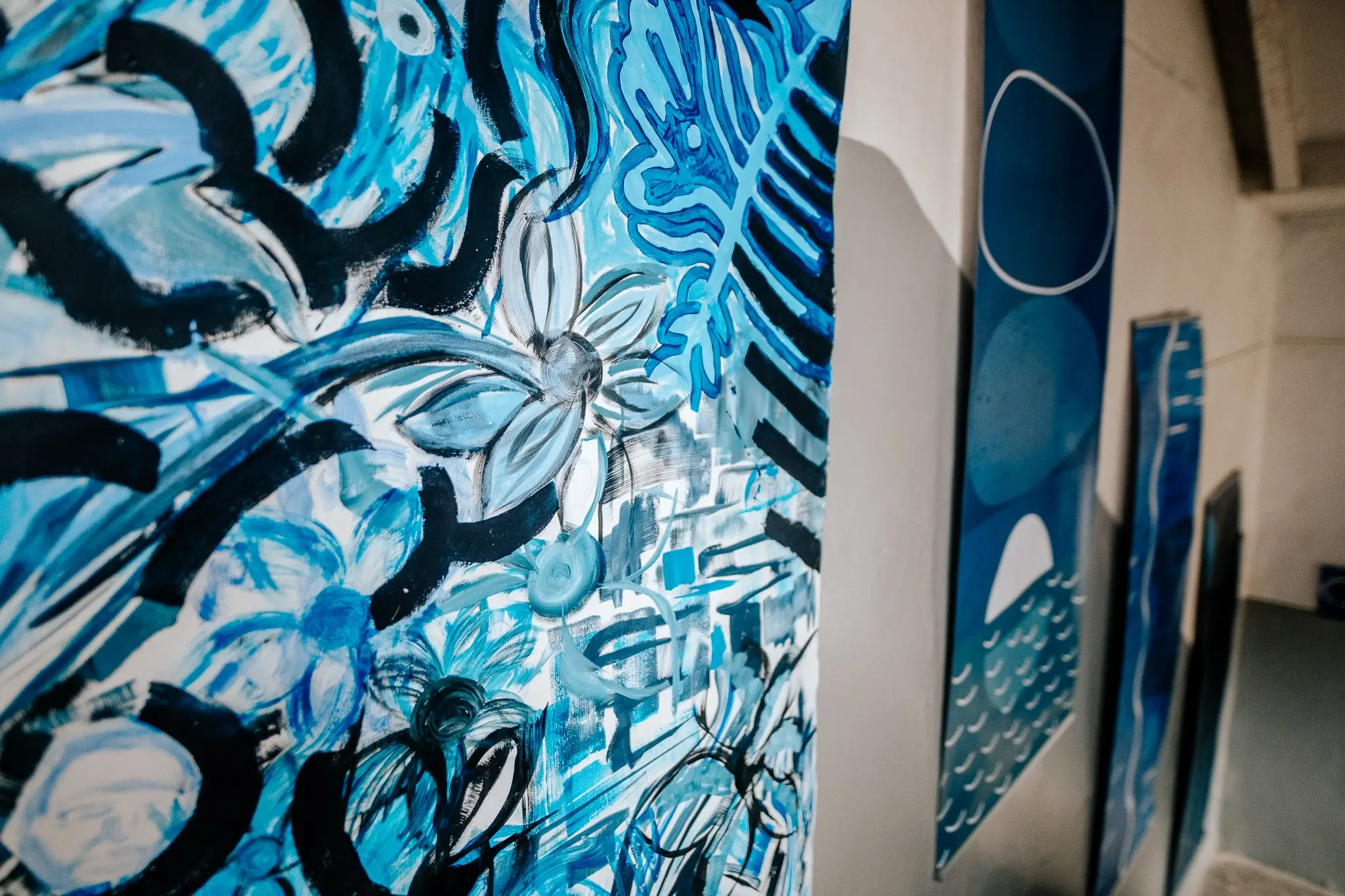
Close-up of a large expressive painting filled with blue, white and black flowers, leaves and sweeping brushstrokes. In the background, tall blue geometric artworks hang along the wall beside a staircase.
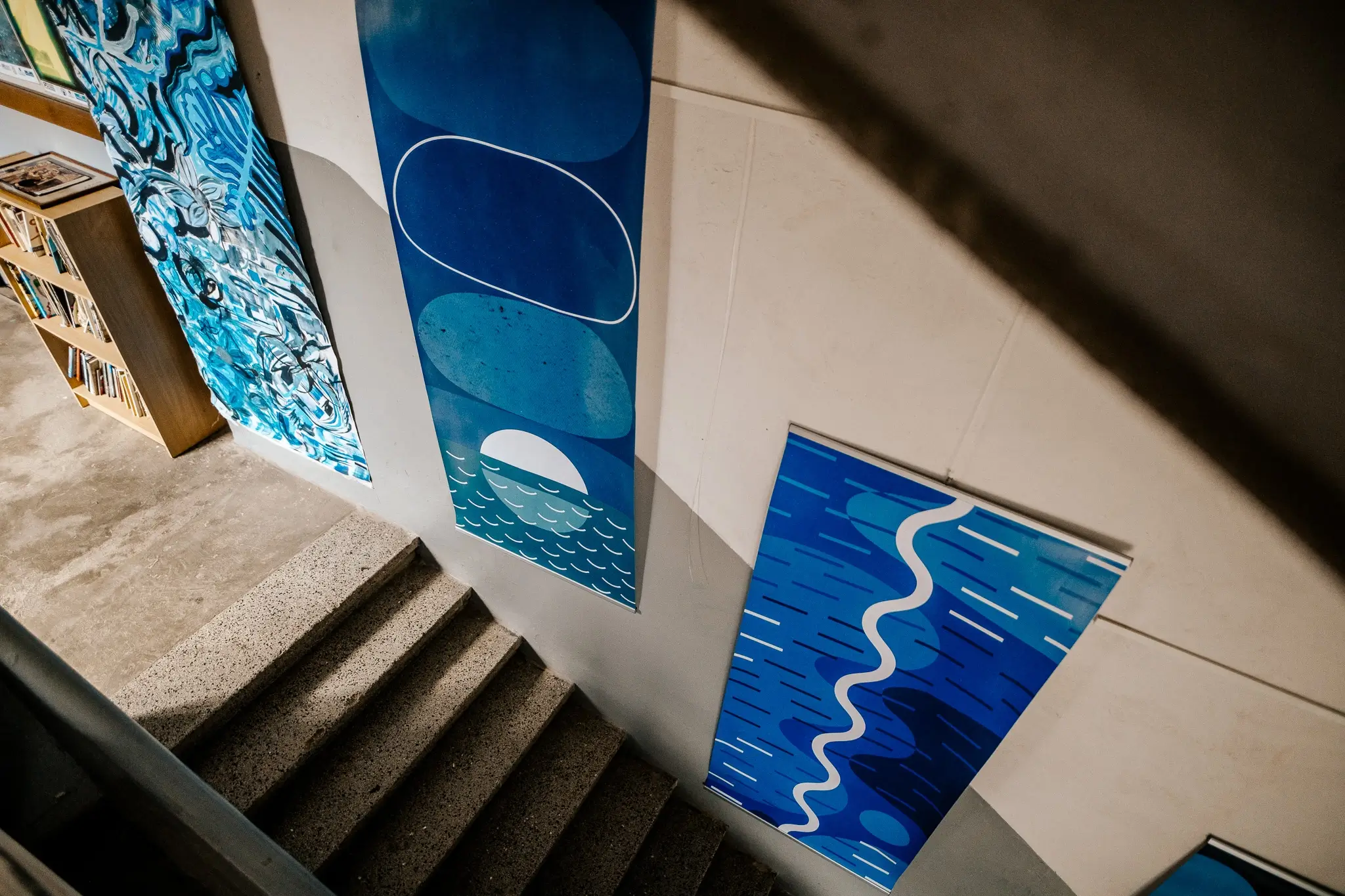
View down a concrete staircase lined with colorful artworks. Two tall blue geometric pieces feature abstract shapes, white lines, a half-circle and stylized waves.
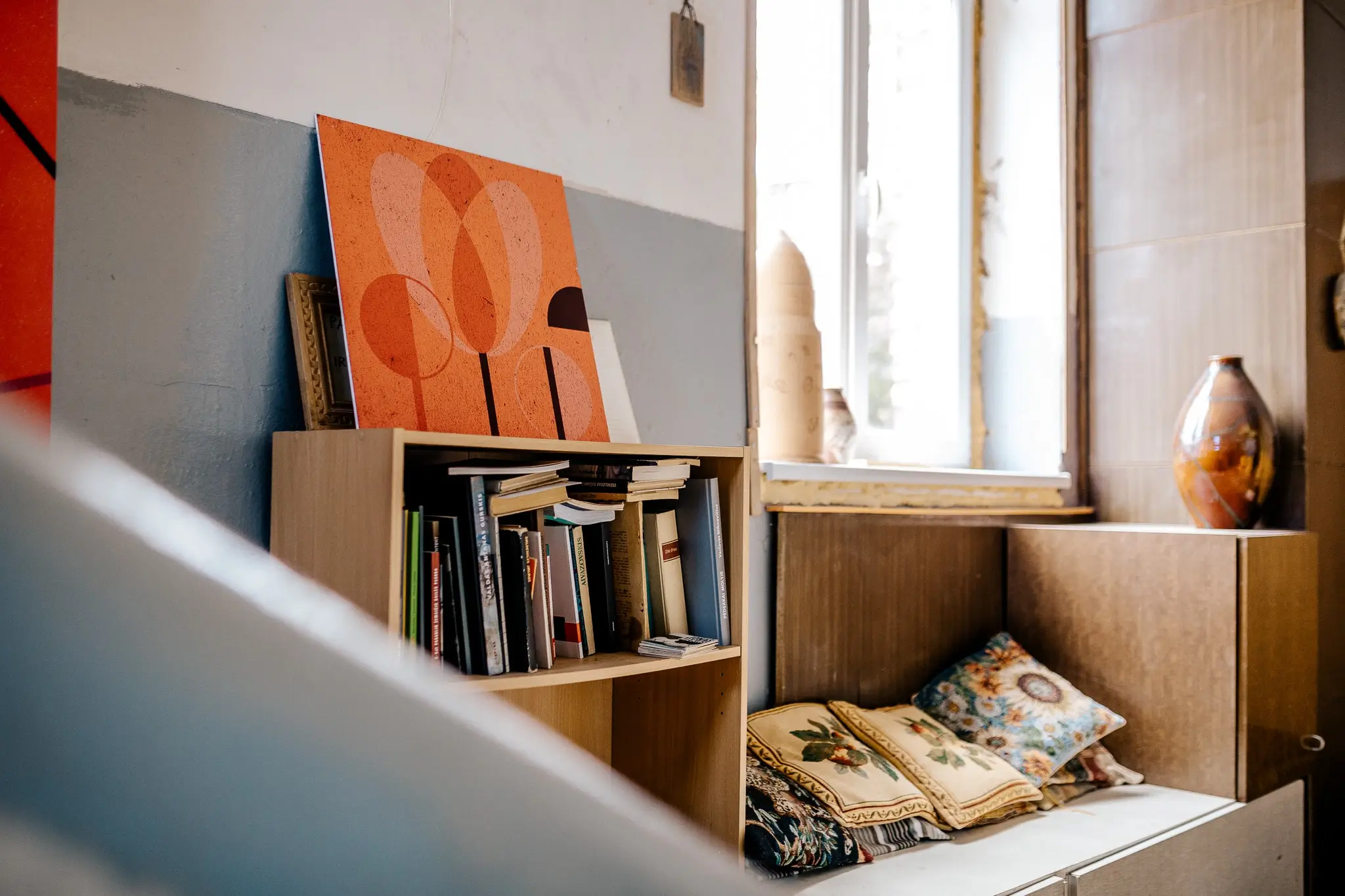
Sunlit interior with bookshelves, patterned cushions and an orange abstract artwork leaning on top of a bookcase. The artwork features overlapping translucent rounded forms in warm orange and brown tones.
Some of the most exciting projects were community exhibitions that brought together professional artists and people from across the neighbourhood. One of them was “Vaivos rykštė” (Rainbow), a collaborative exhibition developed through a series of workshops titled “What Colour Do You Like Most?”
Each meeting and workshop explored a different colour. The resulting works were brought together in a shared painting and design exhibition at our studio.
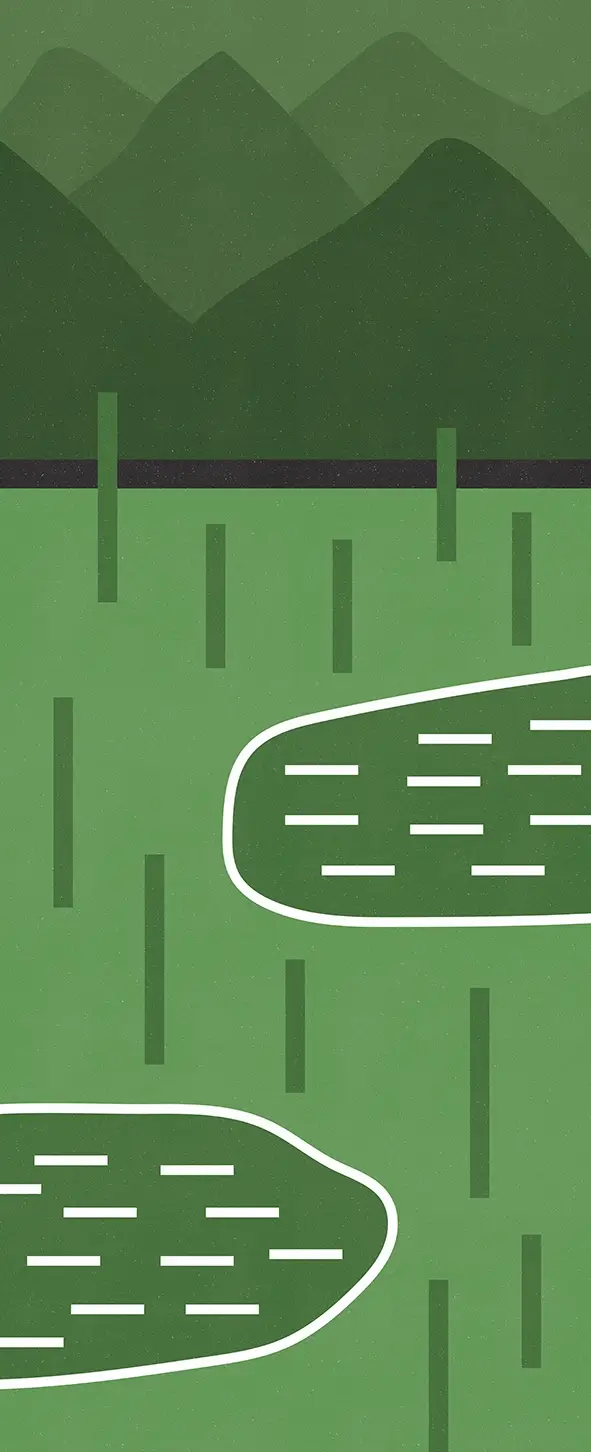
Minimal green landscape illustration with layered dark-green mountains in the background and two white-outlined organic shapes filled with short white dashes in the foreground.
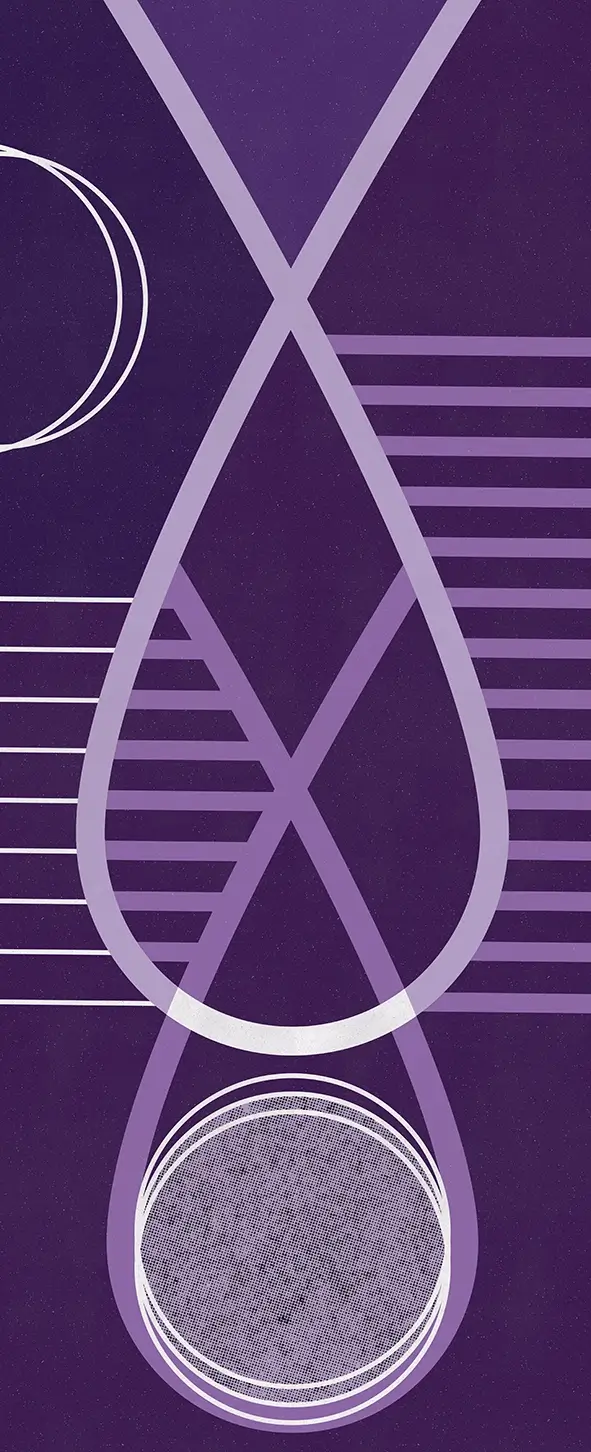
Vertical purple geometric illustration with looping lavender lines, horizontal stripes and overlapping circular forms in white and pale purple.
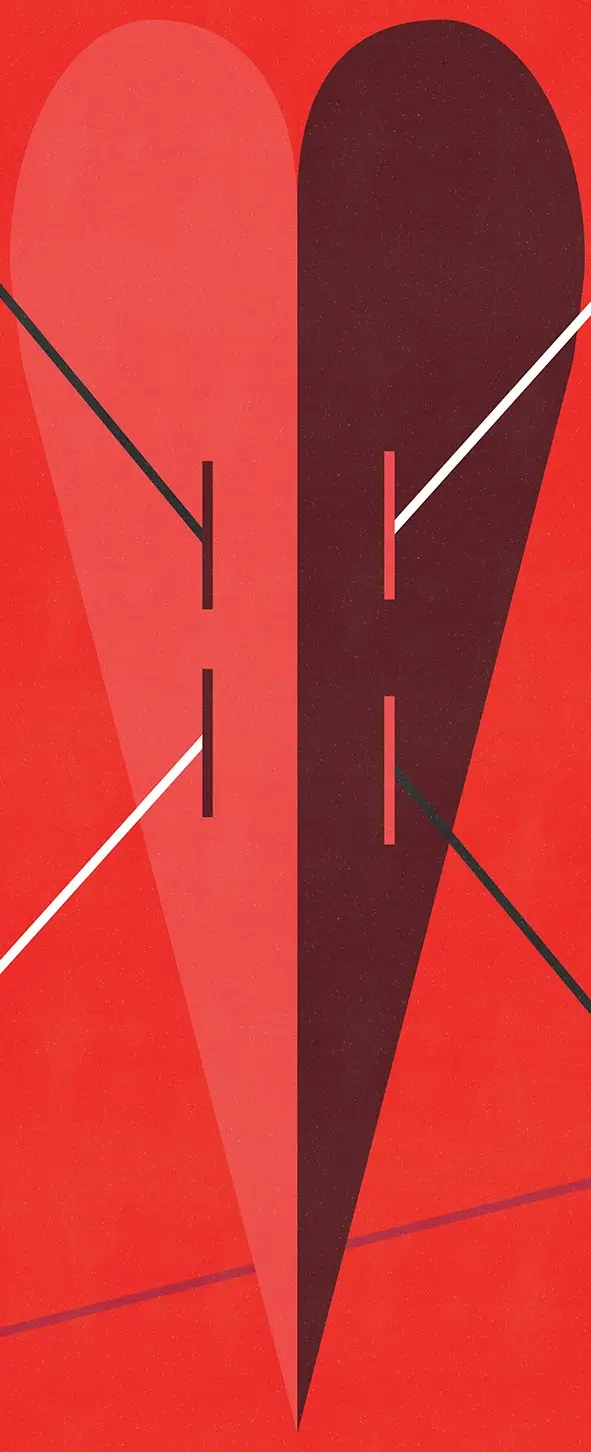
Vertical abstract illustration in vivid red, with two long rounded forms—one lighter red and one dark burgundy—meeting in a sharp point at the bottom. Thin black and white diagonal lines cross the composition.
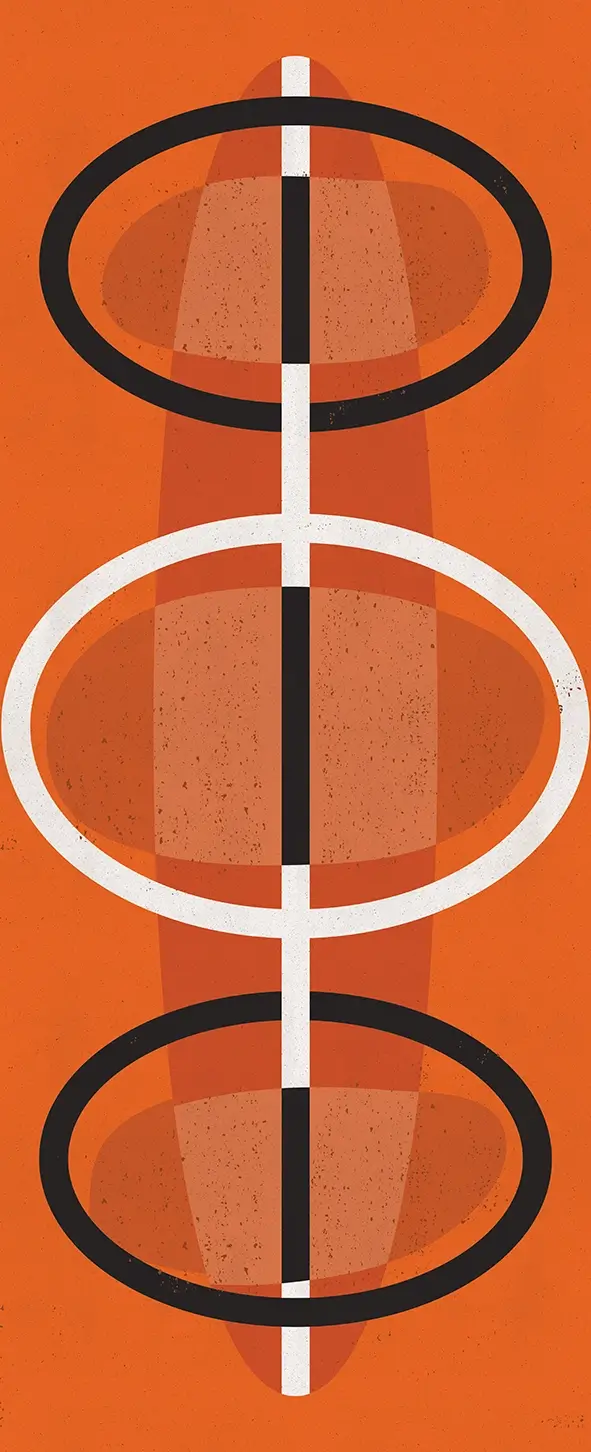
Vertical geometric illustration on a bright orange background, featuring three large oval rings connected by a central black-and-white vertical line.
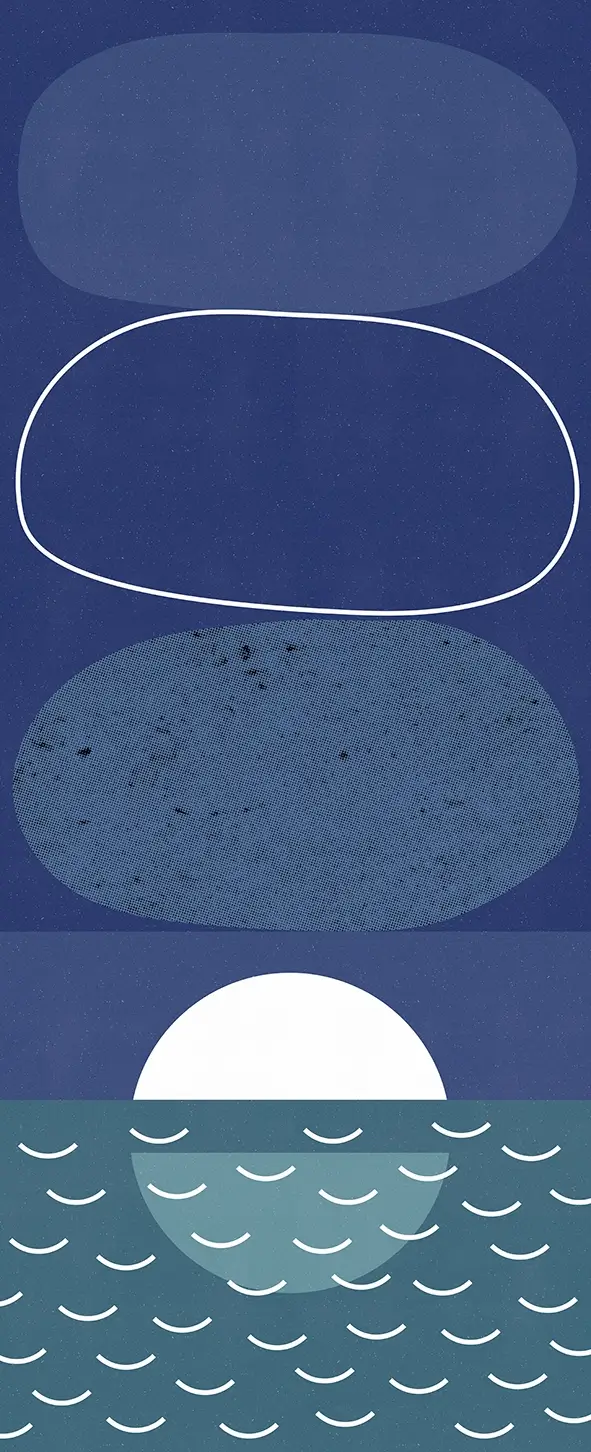
Vertical abstract illustration in deep blue and teal, with stacked rounded shapes outlined in white. At the bottom, a white half-circle rises above stylized water made of small white waves.
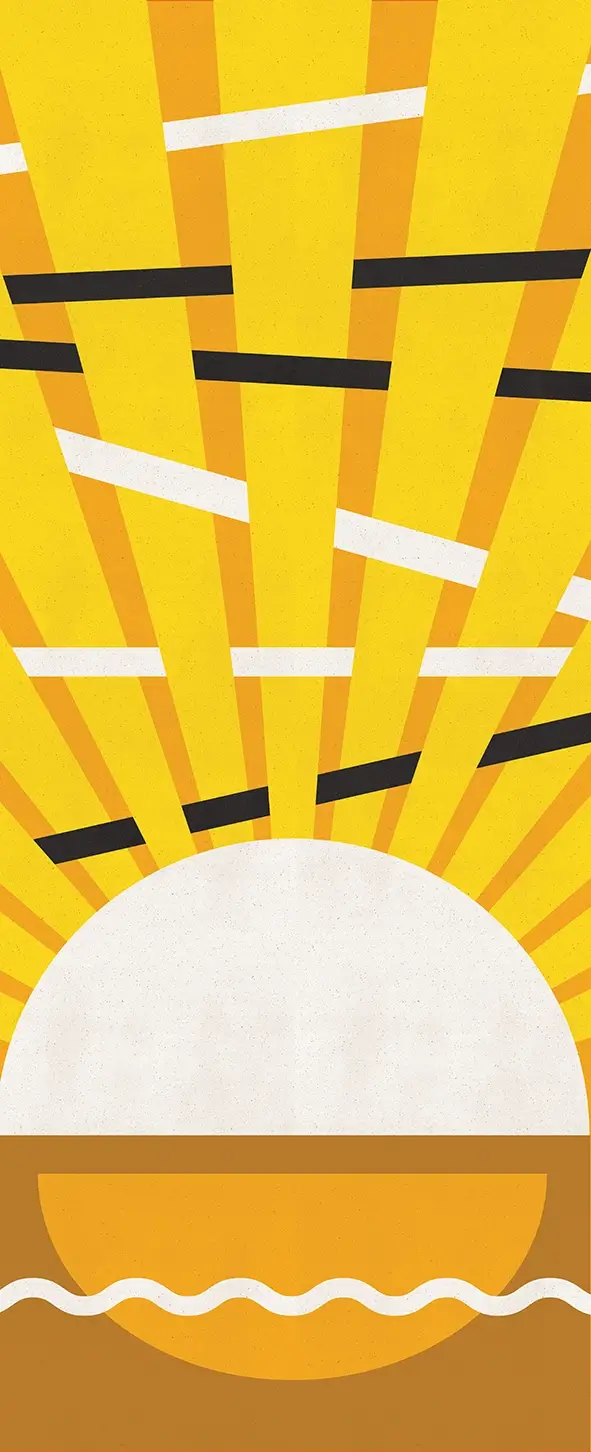
Bright yellow and orange geometric illustration with radiating vertical bands and crossing black and white lines. A large white semicircle meets an orange semicircle near the bottom, crossed by a wavy white line.